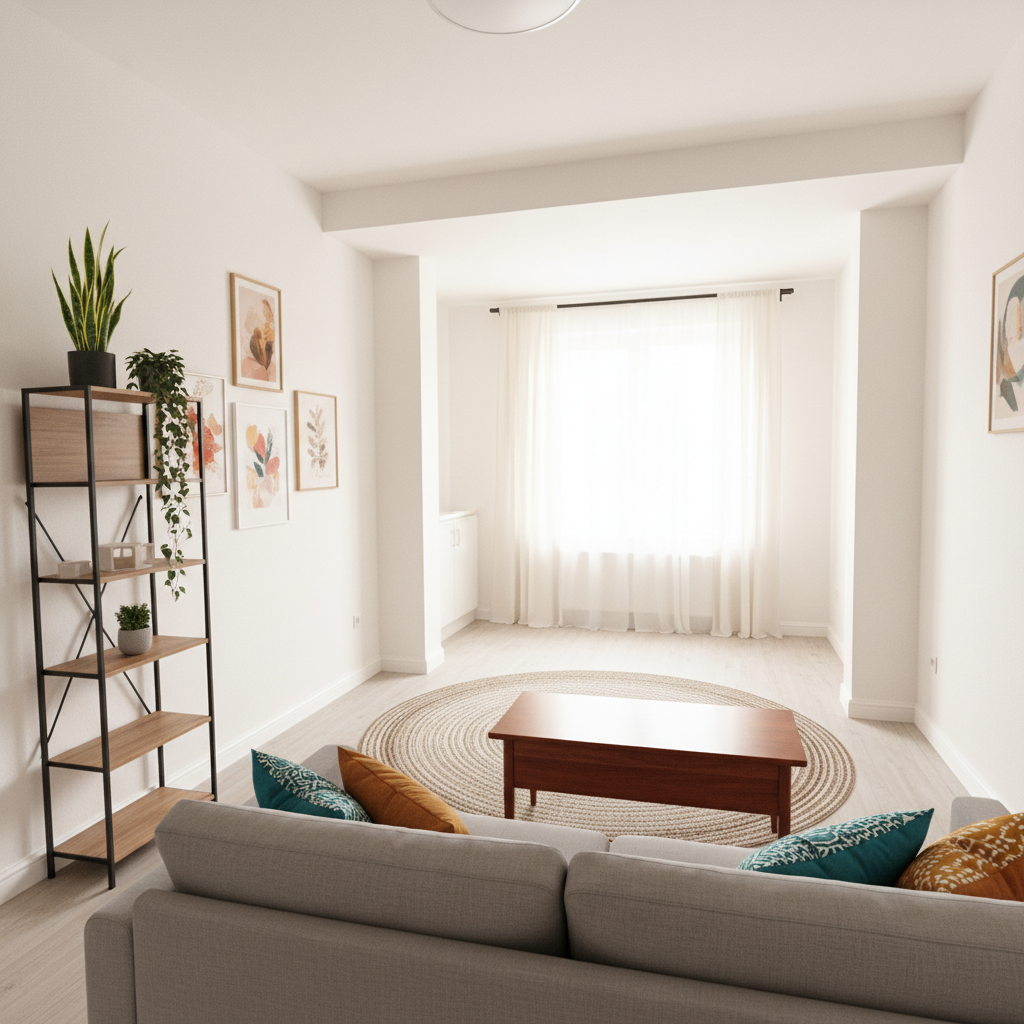
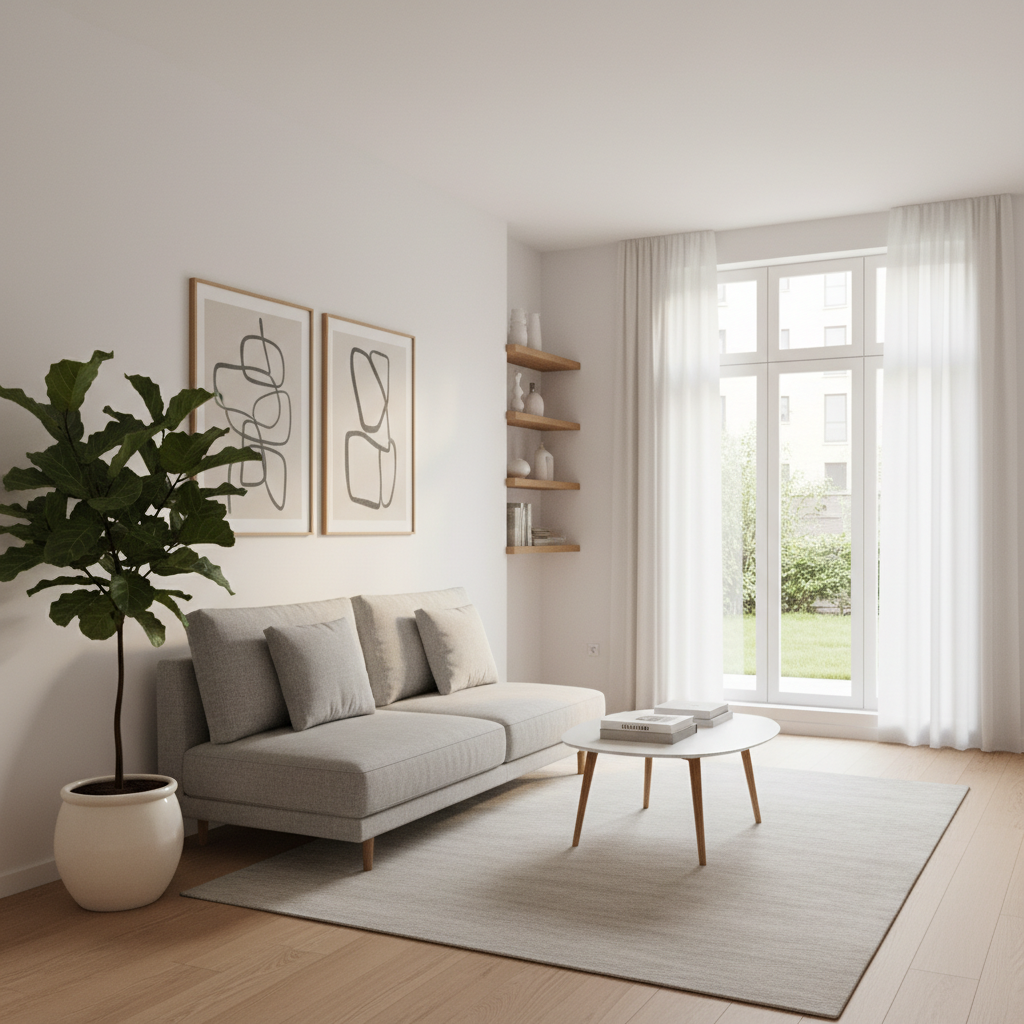
Small Living Room Layout Ideas That Make Any Space Look Bigger
Transform your cramped space with these Small Living Room Layout Ideas That Make Any Space Look Bigger using smart furniture placement and design tricks.
Living in a small space doesn’t mean you have to feel cramped or uncomfortable. Many homeowners struggle with making the most of limited square footage in their living rooms. The good news is that smart design choices can transform how your space feels and functions.
Your small living room layout plays a major role in determining whether your space feels open or cluttered. With the right strategies, you can create a room that feels inviting and spacious, no matter how many square feet you’re working with. The key lies in understanding how furniture placement, color choices, and visual tricks work together.
This guide walks you through proven small living room layout ideas that make any space look bigger. You’ll discover practical solutions that don’t require expensive renovations or major changes. Whether you’re renting or own your home, these tips help you maximize comfort and style in your compact living area.
From selecting the right furniture scale to using mirrors strategically, you’ll learn actionable steps to take right away. Small doesn’t mean sacrificing what you love about your living room. With thoughtful planning and design know-how, your small living room layout can work as hard as you do.
Key Takeaways
Smart furniture placement instantly makes small living rooms feel larger and more functional
Choosing properly scaled furniture prevents your space from feeling overcrowded and cramped
Floating furniture away from walls creates better flow and visual space
Vertical storage solutions draw eyes upward and open up your room
Strategic mirrors and lighting multiply the sense of openness and brightness
Clear pathways and zone creation improve how your small living room layout works daily
Decluttering and minimal design principles make compact spaces feel serene and organized
The size of your room is less important than you think. What really matters is how you arrange your belongings. Smart furniture placement can make a small room feel big and welcoming. By placing furniture wisely, you control how people move and what they see first.
Furniture placement in small rooms affects everything. It impacts how people move and how open the room feels. Bad placement creates clutter, making rooms seem smaller. Good placement opens up views and creates space. Our brains see empty space as freedom, making small rooms feel bigger.
Think about how your arrangement affects natural light. Big pieces blocking windows make rooms dark and cramped. Placing furniture to show off windows and light brightens the whole space. This simple change makes your room feel bigger.
The way we see rooms is deeply connected to design. When furniture is not stuck to walls, rooms feel larger. Clear focal points guide our eyes and give purpose. Empty space between furniture acts like oxygen for small rooms.
Avoid pushing all furniture against walls
Leave clear pathways for movement
Position pieces to maximize natural light
Create focal points that draw attention
Use vertical space strategically
The best news is you already have everything you need. Just rearranging what you have can change your living room without spending money. Knowing these tips lets you see your space in a new way. You can make smart choices about furniture placement in small rooms.
Choosing the Right Scale Furniture for Your Small Living Room
Choosing the right furniture size is key to making a small living room feel bigger. A big sofa or a large coffee table can make a room feel tight. It’s important to pick furniture that fits your room’s size well.
When you choose furniture that’s the right size, your small room looks bigger. This guide will show you how to measure your space and pick furniture that does more than one thing.
Measuring Your Space Before You Shop
Before you start shopping, take out a tape measure. Measure your room’s length, width, and ceiling height. Also, note the width of your doorways, as furniture must fit through them.
Keep these measurements handy when you’re shopping. You can write them down on a card or save them on your phone.
Draw a simple floor plan using graph paper or an online tool. Mark where windows, doors, and outlets are. This helps avoid buying furniture that won’t fit.
When looking at furniture, check its depth and height. The 18-inch walkway rule is important: leave enough space to walk between big pieces of furniture.
Measure doorways and hallways leading to your living room
Note ceiling height to ensure tall pieces fit properly
Document window and outlet locations on your floor plan
Keep all measurements accessible while shopping
Account for doors that swing into the room
Multi-Functional Pieces That Work Harder
Choosing smart furniture helps reduce clutter and the number of items you need. Pieces that do more than one thing are great for small rooms.
Storage ottomans can be footrests and hide storage. Sofa beds offer seating by day and a place to sleep at night. Nesting tables are small but expand when needed. Console tables serve as desks, entryway stations, or display areas without taking up much space. Wall-mounted drop-down desks are perfect for extra desk space without cluttering the floor.
Furniture Type
Primary Use
Secondary Benefit
Space Impact
Storage Ottoman
Footrest and seating
Hidden storage compartment
Reduces need for separate storage
Sofa Bed
Daytime seating
Guest sleeping space
Eliminates need for extra furniture
Nesting Tables
Coffee table surface
Stack compactly or spread out
Flexible and portable
Console Table
Display and entryway
Doubles as desk or work surface
Slim profile saves floor space
By picking furniture that does more than one thing, you make your small living room more functional. Having fewer items makes the room feel open and larger. This smart approach to design makes your room both useful and nice to look at.
The Power of Floating Furniture Away from Walls
Many think pushing furniture against walls makes small living rooms look bigger. But this idea is actually a trap. Floating furniture away from walls adds depth and makes your room look more open and stylish.
When you move your sofa 12 to 18 inches from the wall, new possibilities open up. Add a sleek console table behind it for lamps, plants, or decorations. This creates cozy zones without feeling cramped. The wall behind your furniture makes your room seem bigger than it is.
Floating furniture improves traffic flow dramatically. It lets people move through your space more easily. Chairs angled slightly away from corners make your room feel more inviting. This setup looks planned and stylish, not cluttered.
Worries about wasting space are common. But the truth is different:
Floating arrangements define separate zones
Visible walls behind furniture expand perceived space
Better traffic patterns make rooms feel less congested
Strategic placement creates visual interest
Narrow rooms might need furniture against walls. But try pulling one piece away from the wall. You’ll see how your room changes. This simple move can change how your space feels and works.
Small Living Room Layout Ideas That Make Any Space Look Bigger
When you have a small living room, how you arrange your furniture is key. Ideas for small living rooms focus on smart placement and careful choices. The right setup can make your room look bigger than it is. Let’s look at two effective strategies for smaller spaces.
The L-Shaped Sectional Strategy
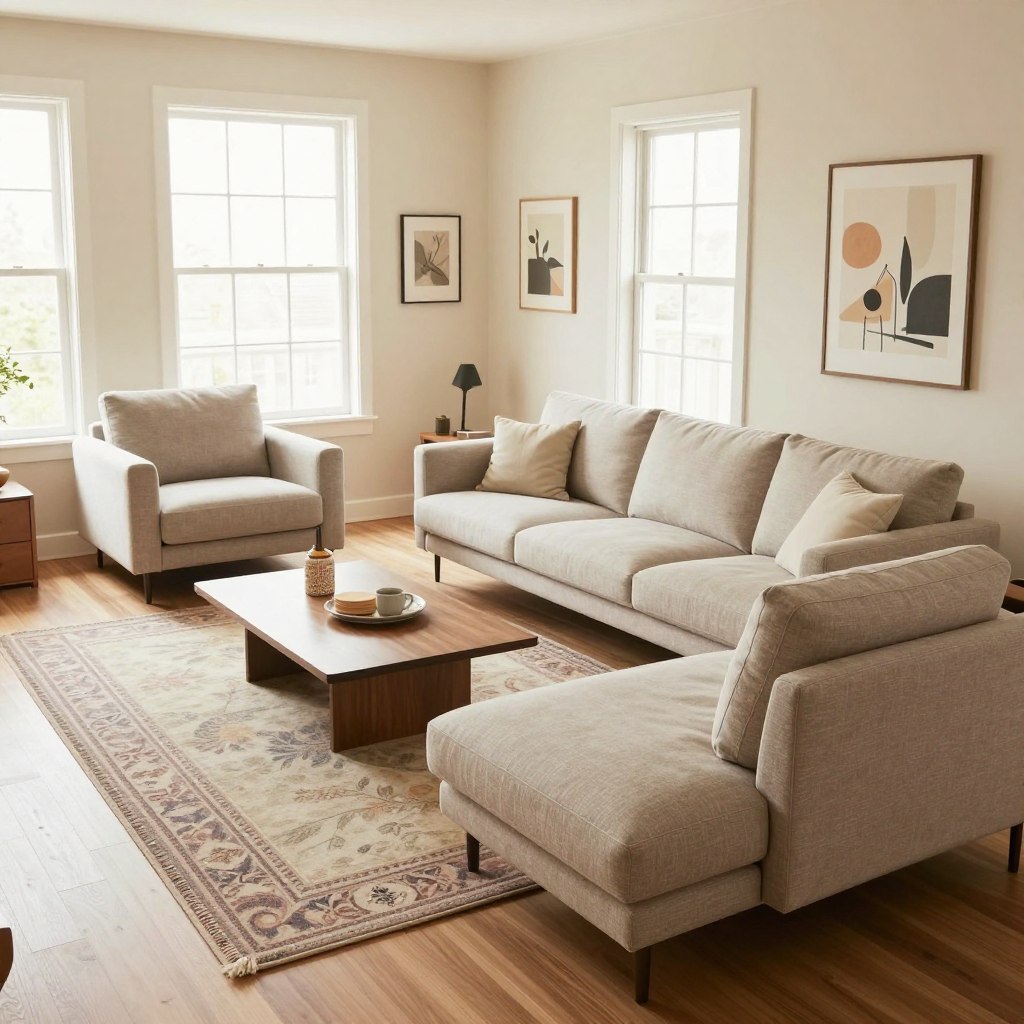
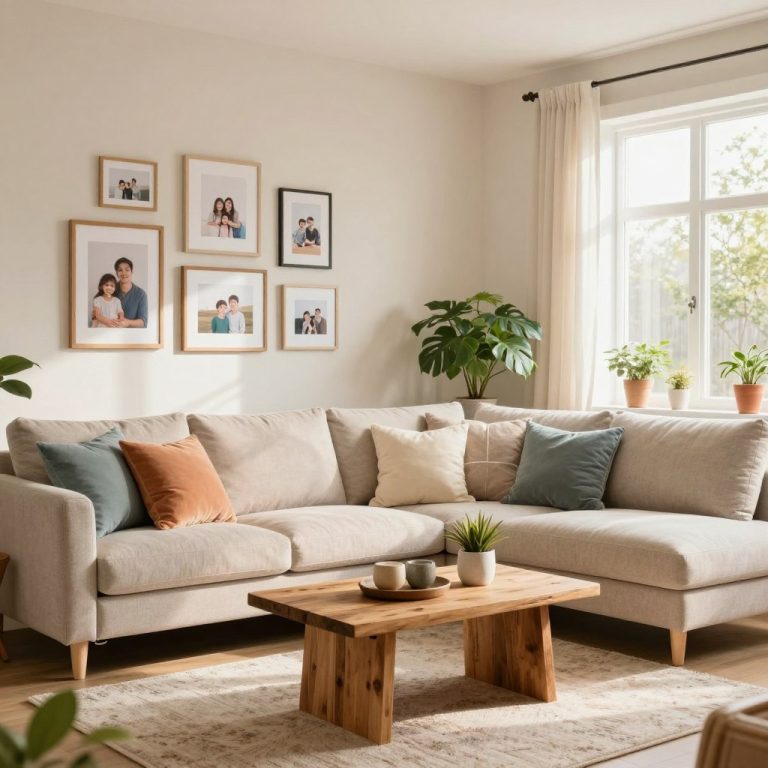
An L-shaped sectional can be a game-changer for small living rooms. It offers plenty of seating without making the room feel cramped. Look for sectionals with these features:
Lower backs that create visual lightness
Exposed legs that let you see the floor underneath
Compact dimensions designed for tight spaces
Modular pieces you can rearrange as needed
Place your sectional to face your room’s main attraction, like a TV or fireplace. This setup helps guide traffic and keeps corners free for other uses, like a reading area or plant stand.
The Symmetrical Balance Approach
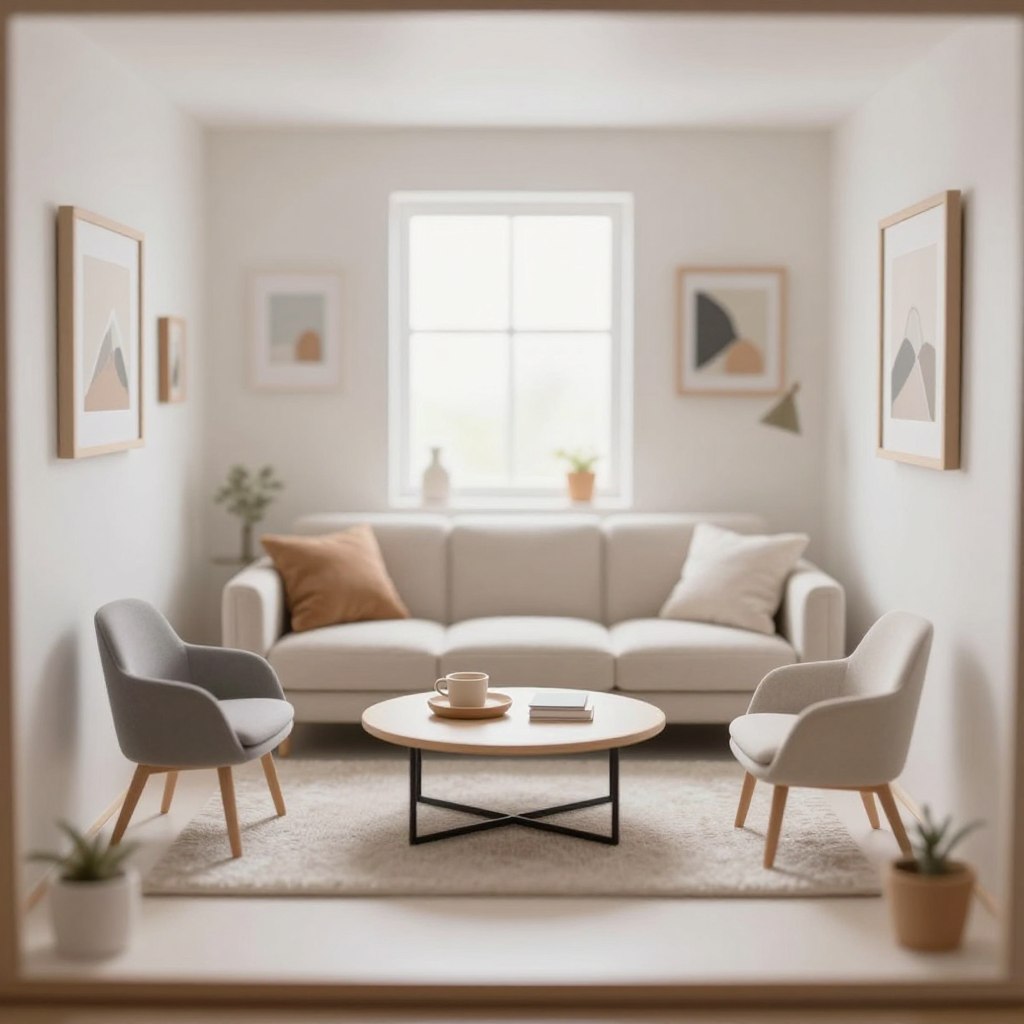
Symmetrical layouts bring calm and order to your space. They make small living rooms look bigger and more planned. Try these balanced setups:
Layout Style
Best For
Key Elements
Fireplace Flanking
Square or rectangular rooms with a focal point
Matching chairs on each side, centered coffee table
Sofa-Centered Setup
Rooms where the sofa is the main anchor
Identical end tables, balanced side chairs
Twin Seating
Open concept or conversation-focused spaces
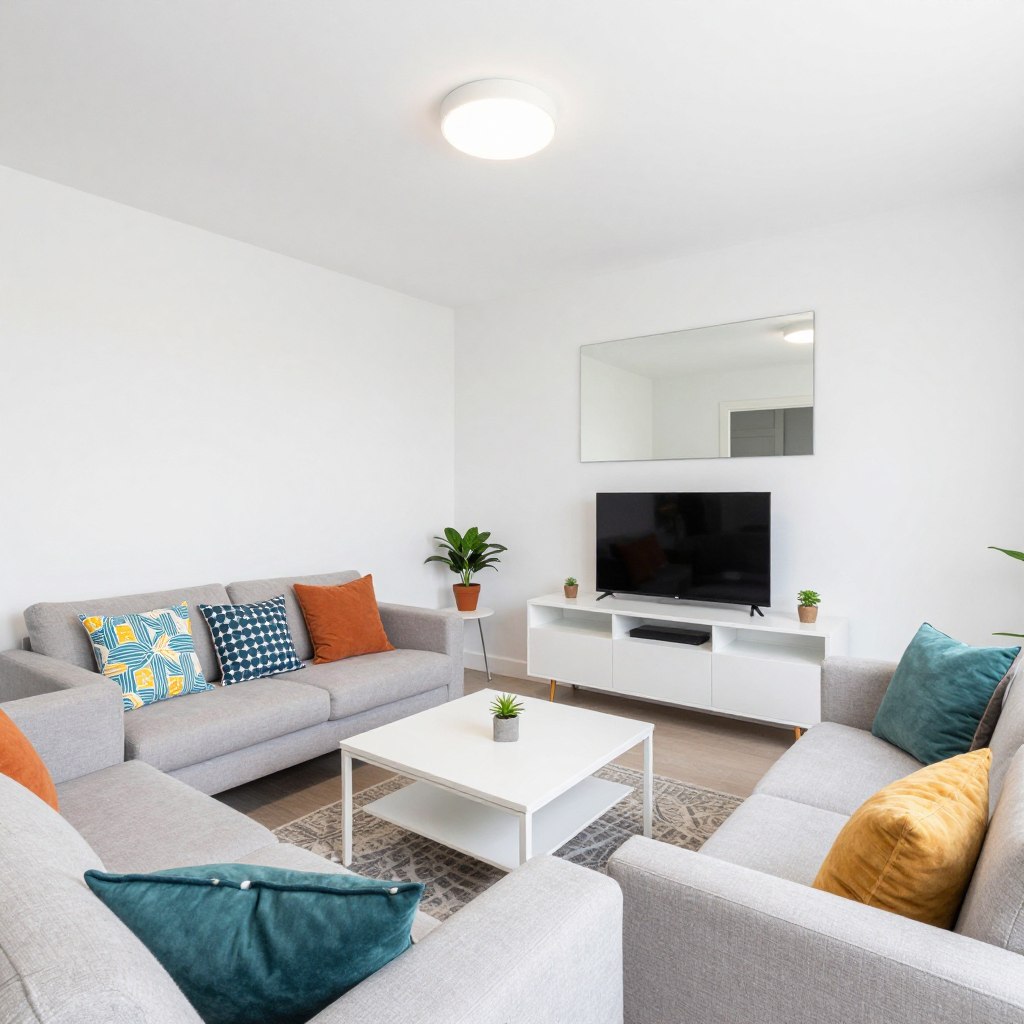
Two matching sofas facing each other, centered rug
Symmetry makes your space feel more spacious and organized. Centered coffee tables and matching furniture create balance. This works well in rectangular rooms.
Creating Clear Pathways and Traffic Flow
Optimizing your small living room layout means focusing on traffic flow. It’s not just about where you sit. Clear paths make your room feel open and welcoming. On the other hand, blocked routes can make even big rooms feel cramped.
Consider your room’s natural entry points. Most people enter through doorways and head towards windows or the main seating area. These paths shape your room’s traffic patterns. When you optimize your layout, follow these paths instead of fighting them.
Main pathways need 30 to 36 inches of clear space
Secondary routes between furniture require at least 18 inches
Doorways should remain completely unobstructed
Windows need clear access for natural light and views
Walk through your space from different entry points. Move as if you live there. Does the path feel natural or do you zigzag awkwardly? Poor traffic flow can make your room feel cramped and choppy.
Arrange your furniture to guide movement. A sofa angled towards a corner can direct people around it. This simple change helps optimize your layout while keeping everything accessible. Don’t be afraid to try new arrangements. Finding the right flow might take some trial and error, but it’s worth it.
Vertical Space Solutions That Draw the Eye Upward
Looking up is a great way to decorate small spaces. Your walls go way beyond what you can see. Using them makes your room feel bigger.
Vertical storage does more than just hold things. It keeps your floor clear and adds interest. This makes small rooms feel less cramped and more welcoming.
Wall-Mounted Shelving and Storage
Floating shelves are a smart choice for small spaces. They save floor space and look good. Place shelves at different heights to make your room feel taller.
To avoid clutter, style your shelves carefully. Use these tips:
Leave space between items
Group items in odd numbers
Alternate between tall and short items
Use baskets for hidden storage
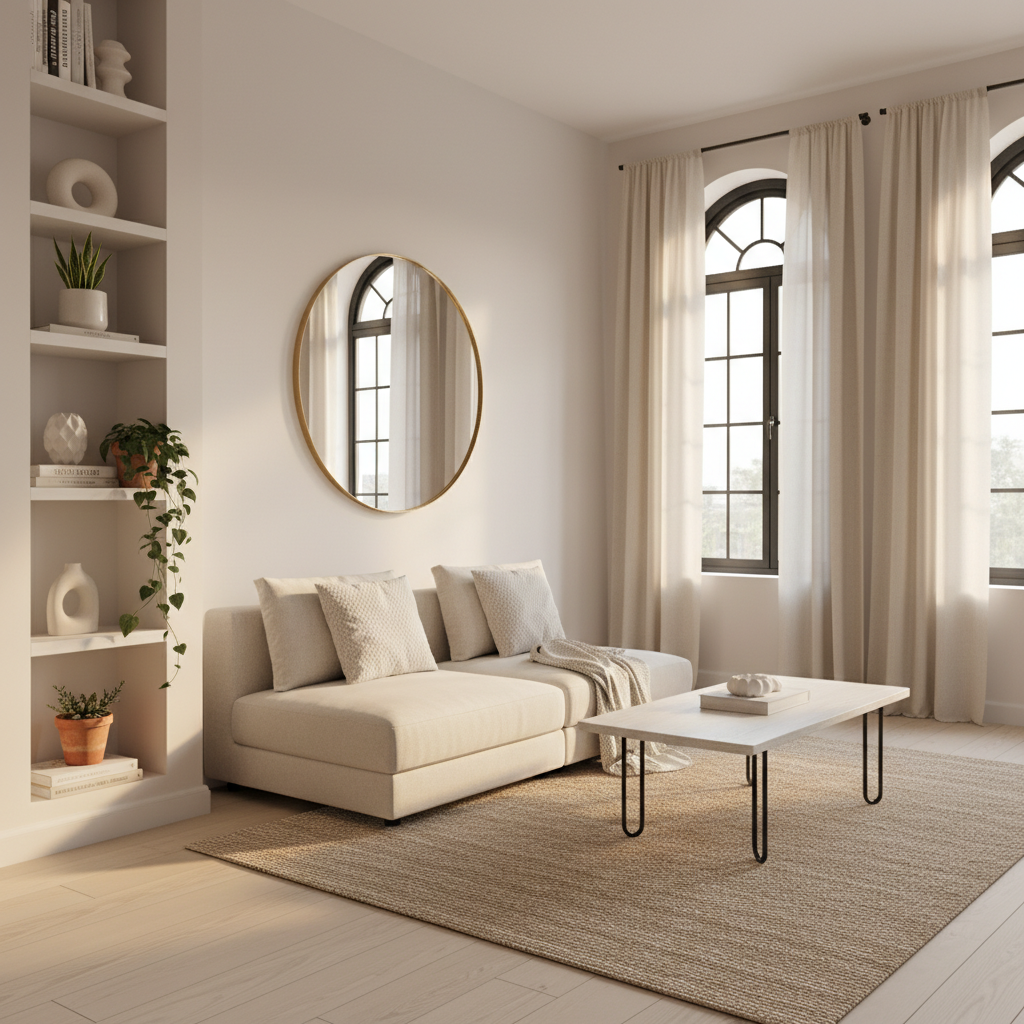
Include plants that hang down
Wall-mounted cabinets are great for hiding things. They keep your space clean and stylish.
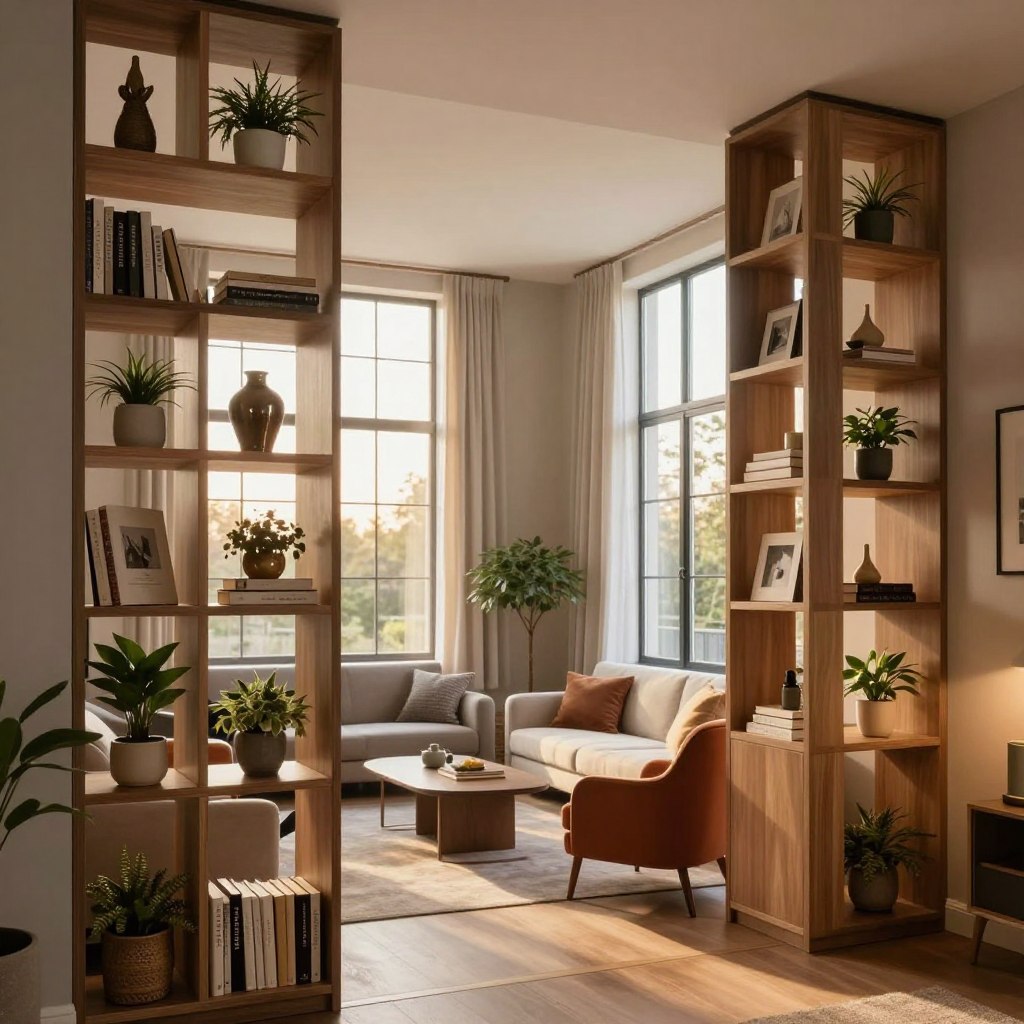
Tall Bookcases and Display Units
Vertical bookcases are a great idea for small spaces. They save floor space and make ceilings seem higher. Choose tall, narrow units for best results.
Here are some styling tips for tall bookcases:
Styling Technique
Visual Impact
Best For
Floor-to-ceiling arrangement
Makes walls appear taller
Rooms with 8+ foot ceilings
Alternating book and décor placement
Creates visual rhythm
All room sizes
Top-shelf art and plants
Emphasizes height
Modern and contemporary spaces
Color-coordinated books
Organized, sophisticated look
Minimalist designs
Adding tall plants near bookcases makes your room feel taller. Floor-to-ceiling curtains also help by framing your walls. These elements make your room feel open and elegant.
The top third of your walls is full of possibilities. Hang artwork, mirrors, or shelves at ceiling height. This turns unused space into a beautiful display, making your small room feel intentional and spacious.
Strategic Mirror Placement to Expand Visual Space
Mirrors are a great way to make small rooms look bigger without big renovations. They reflect light and create depth, changing how your room feels. Placed right, mirrors can make your space feel bigger and brighter.
Mirrors bounce light around your room. A big mirror opposite a window spreads sunlight, making your room feel open. This trick makes small rooms look bigger by lighting up dark spots.
Finding the right spot for mirrors is both a science and an art. Here are the best spots for mirrors:
Opposite windows to bounce natural light across the room
Above sofas or console tables to create focal points
On walls perpendicular to windows to expand width
Behind furniture to create depth perception
At eye level for reflection purposes
Large statement mirrors are better than many small ones in small spaces. A big mirror makes a strong statement and makes rooms look bigger. But, a gallery wall of mirrors needs careful planning to avoid looking cluttered.
Mirror Style
Best Use in Small Spaces
Visual Effect
Large Statement Mirror
Above sofa or main wall
Expands space significantly
Floor-to-Ceiling Mirror
Corner or accent wall
Creates dramatic depth
Antique Frame Mirror
Above furniture or mantels
Adds character and elegance
Mirrored Furniture
Side tables or cabinets
Reflects light subtly
Mirror-Backed Shelving
Wall storage solutions
Doubles displayed items visually
Don’t put mirrors where they show clutter or awkward views. Bad placement can make your space feel cramped. Choose mirrors that reflect nice views, like windows or artwork.
Mirrors aren’t just for walls. Mirrored furniture and shelves reflect light without taking over the room. They make your space look bigger and show off your favorite things.
Antique mirrors add charm to small rooms. Their frames are interesting, and the imperfect reflection adds elegance. They look great above sofas or on accent walls, sparking conversations.
Try different mirrors and places to find what works best for you. The right mirrors can make your room feel bigger, brighter, and more designed. With the right mirrors, even small rooms can feel open and welcoming.
Light and Color Tricks That Open Up Your Room
Light and color can make a small room feel bigger. The right paint shades and lighting layers can change how your living room looks. You don’t need all-white walls to feel open. Choosing colors and lights wisely can add depth and keep your style.
These design tricks are easy and affordable. They don’t require moving walls or buying new furniture. By knowing how light and colors work, you can instantly make your room feel bigger.
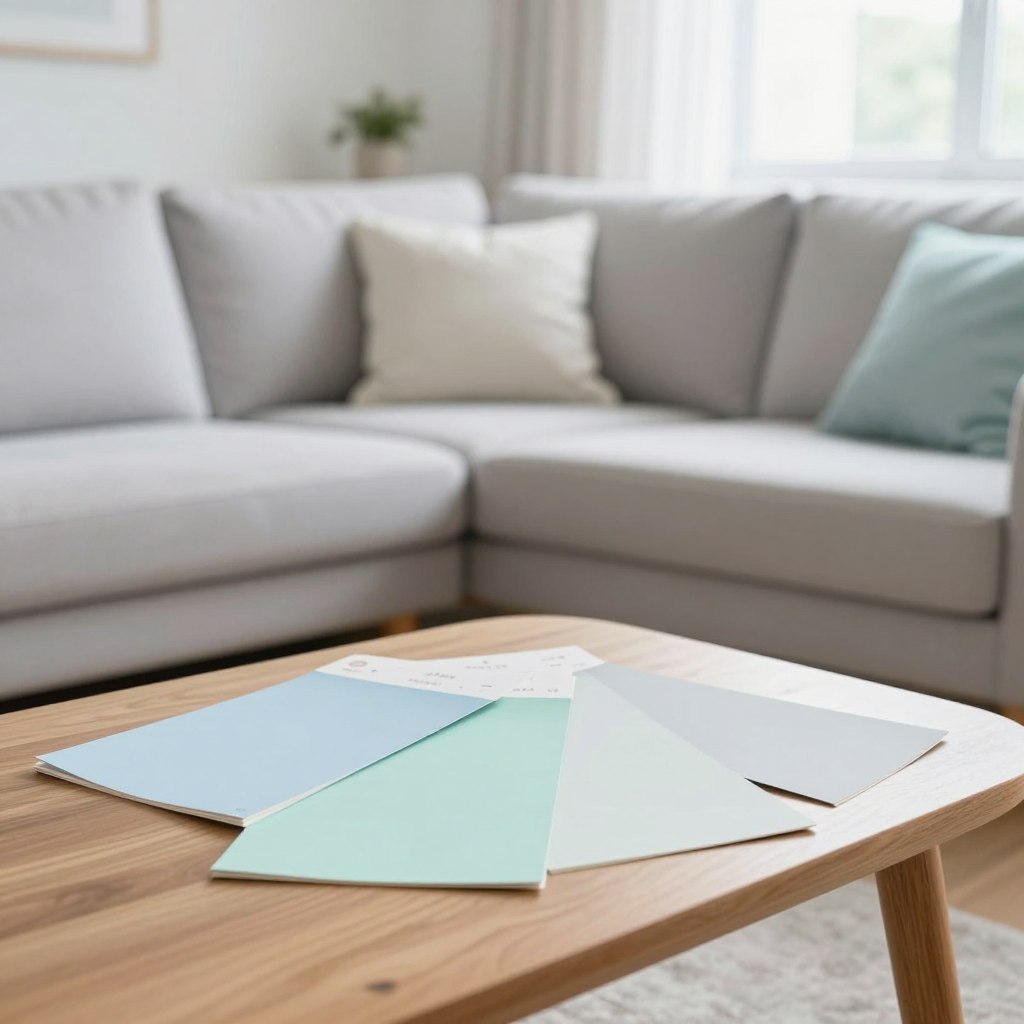
Choosing the Right Paint Colors
Light, neutral colors reflect more light and make walls seem to fade away. This trick makes your room feel more open than darker shades can. Soft whites, pale grays, and light beiges work well in any style.
Monochromatic colors are another smart choice. This method uses different shades of the same color on walls and surfaces. It adds interest without breaking up the space, making your room feel bigger. For example, try a light gray wall with slightly darker gray trim and furniture.
Consider accent walls too. A single wall in a deeper shade creates focal points without overwhelming the room. This adds personality while keeping your room feeling spacious.
Paint Color Option
Light Reflection Level
Best Use
Feeling Created
Soft White
Very High
Main walls
Clean, bright, airy
Pale Gray
High
Feature walls
Calm, sophisticated
Light Beige
High
Main walls
Warm, inviting, open
Cream
High
Trim and accents
Cozy yet spacious
Soft Blue
Medium-High
Accent wall
Peaceful, expansive
Layering Lighting for Depth
Multiple light sources at different heights add depth and eliminate dark corners. This makes rooms feel less cramped. Think of lighting in three layers: ambient, task, and accent lighting.
Ambient lighting gives overall light through overhead fixtures. Choose flush-mount ceiling lights for small spaces instead of large chandeliers. Task lighting includes reading lamps and desk lights for specific tasks. Accent lighting highlights special features with picture lights, uplights, or wall sconces.
Install dimmer switches to control brightness levels
Use warm white bulbs (2700K) for cozy comfort
Position lights at varying heights around the room
Maximize natural light with sheer window treatments
Add table lamps on side tables near seating areas
Use wall-mounted sconces to save floor space
Well-lit spaces feel more open and inviting. Strategic lighting draws attention to your room’s best features and adds visual interest. This makes your small room feel bigger.
Decluttering and Minimalist Design Principles
Clutter can make even the smartest furniture arrangement feel cramped. A cluttered room, no matter its size, feels chaotic. The good news is that decluttering can make your space feel open and peaceful.
Decluttering is like editing your life. You don’t need to go all in on minimalism. Just keep items that have a purpose or bring you joy. This way, every piece in your compact living room earns its spot.
Magazine and book collections that pile up over time
Remote controls and electronic cords scattered around
Decorative objects that dust but don’t delight
Furniture pieces that don’t fit your layout
Throw pillows and blankets in excess
Smart storage solutions keep things hidden but easy to find. Use storage ottomans, woven baskets, and closed cabinets. These keep your space tidy without clutter.
The “one in, one out” rule helps keep clutter at bay. When you add something new, get rid of something old. This keeps your living room tidy.
Decluttering Strategy
Time Commitment
Impact Level
Seasonal decorative editing
1-2 hours every 3 months
High
Furniture assessment
2-3 hours once yearly
Very High
Electronics cord management
30 minutes monthly
Medium
Book and media sorting
1-2 hours every 6 months
High
Minimalism is not about having nothing. It’s about having exactly what you need and love.
Having fewer, well-chosen pieces can make a bigger impact than many small items. Fewer furniture pieces make your room feel larger and more welcoming.
Decluttering is a continuous process, not a one-time task. Regular checks, like every three months, help keep your space tidy. This prevents clutter from building up again.
Minimalism is a spectrum, and you can pick your level. Even small steps in decluttering can make your compact living room feel more spacious and serene.
Zone Creation in Open Concept Small Spaces
Open-concept living areas can be tricky to design, but it’s doable. When your living room, dining area, and kitchen share space, it can feel cramped. But, by creating distinct zones, you can make your small living room feel larger and more organized.
Creating zones means setting up visual and physical boundaries without walls. This method lets each area have its own identity. It keeps the space open and flowing, which is what makes small spaces appealing. It’s like giving different parts of your room their own jobs.
Using Rugs to Define Areas
Area rugs are a great and affordable way to separate your small living room from other areas. A well-chosen rug acts as an invisible boundary. It tells your eye where one zone ends and another begins.
Here are some tips for using rugs in your small living room:
Position the rug so front furniture legs sit on it while back legs can be off
Choose neutral or soft-toned rugs that don’t overwhelm compact areas
Anchor your seating grouping with the rug as the foundation
Size your rug appropriately—too small looks disconnected, too large swallows the room
There are more ways to create zones in your small living room:
Use different lighting styles for each area to create subtle separation
Position furniture backs to create implied boundaries between spaces
Apply gentle color or style variations while maintaining overall harmony
Employ floating furniture that naturally divides the room
Creating zones successfully means being intentional and restrained. Your goal is to make your small living room feel sophisticated and spacious. It should feel organized, not cramped or chopped up.
Conclusion
You now have the tools to make your small living room feel bigger without spending a lot. We’ve shared tips on smart furniture placement and using vertical space. These ideas help create rooms that feel open and welcoming.
You don’t have to completely redo your room or spend a lot on renovations. Many changes start with rearranging what you already have.
Begin with small changes, like moving a chair or adding a tall bookcase. Hang a mirror on your biggest wall. Small steps help you build confidence and momentum. Each change shows the power of good design.
Soon, you’ll start to feel excited about your space instead of frustrated by its size.
Remember, limitations can spark creativity. Your small living room is not a problem to hide. It’s a chance to design a cozy and intentional space.
A well-planned compact room can feel more inviting than a big, cluttered one. By maximizing your small living room, you create a home that reflects your style and works well for you.
Start today with what you’ve learned. Whether you move furniture, add mirrors, or declutter your shelves, you’re on your way to a living room that feels bigger and works better for your life.
FAQ
What’s the best small living room layout for maximizing space?
The best layout for a small living room depends on the room’s shape and how you use it. The L-shaped sectional strategy is great for many compact spaces. It maximizes seating and creates natural traffic flow.
The symmetrical balance approach is also effective. It uses matching chairs and centered pieces to create a sense of order. This makes rooms feel more intentional and spacious.Choose furniture that’s the right size for your room. Float pieces slightly away from walls to add depth. Make sure main walkways are at least 30-36 inches wide. Start by measuring your space accurately before shopping.Arrange furniture to face a focal point while leaving corners open for other purposes.
How do I make my small room look bigger without renovating?
You can make a small room look bigger with several visual tricks. Strategic mirror placement is one of the most effective methods. Place large mirrors opposite windows to bounce natural light throughout the room.Choose light, neutral paint colors like soft whites, pale grays, or light beiges. These colors reflect light and make walls appear to recede. Use tall bookcases and wall-mounted shelving to draw the eye upward.Layer your lighting for depth with ambient, task, and accent lighting at different heights. Embrace decluttering and minimalist design principles. Fewer, well-chosen pieces create more visual impact than numerous small items.
Should I push all my furniture against the walls in a small living room?
No, it’s a common misconception that pushing furniture against walls frees up floor space. It actually makes small rooms feel cramped and boxy. Floating furniture away from walls can make your living room feel larger and more sophisticated.Pull your sofa 12-18 inches from the wall to place a console table behind it. Angle chairs slightly away from corners to create more dynamic arrangements. This technique adds visual depth and dimension.Float furniture to improve traffic flow and create intentional zones within your room. The exception is extremely narrow rooms where wall-hugging might be necessary—but even then, consider floating at least one key piece to experiment with the effect.
What furniture pieces work best for compact living room design?
Multi-functional pieces are essential for compact living room design. They serve double duty and reduce the number of items needed, making the room feel larger. Look for space-saving furniture arrangements like storage ottomans and sofa beds.Choose furniture with exposed legs to create visual lightness. Select pieces scaled appropriately to your space. Before purchasing, take accurate room measurements and consider how each piece will function in your space.Investing in quality, versatile pieces is smarter than buying numerous single-purpose items.
How can I create traffic flow in a small living room layout?
Clear traffic flow is key to making small rooms feel open and functional. Follow the general rule of maintaining at least 30-36 inches for main walkways. Identify natural traffic patterns in your room based on doorways, windows, and how the space connects to adjacent areas.Arrange furniture to accommodate these pathways, not obstruct them. Angle furniture slightly to direct flow and create intentional routes through the space. Never block the path to windows or doors.Test your pathways by walking through the room multiple times from different entry points. If movement doesn’t feel natural and effortless, adjust furniture placement until it does.
What’s the 18-inch rule for small living room furniture placement?
The 18-inch rule is a fundamental principle for furniture placement in small rooms. It ensures adequate space for movement and prevents the space from feeling cramped. This guideline suggests maintaining at least 18 inches of clearance for secondary pathways between furniture pieces.The primary walkways should be larger, ideally 30-36 inches wide, to allow people to move easily and naturally through the space. For example, leave at least 18 inches between the coffee table and sofa, and 18 inches between chairs and walls or other furniture pieces.This measurement ensures that your small living room layout functions smoothly while maintaining the psychological sense of openness that makes compact spaces feel larger.
How do I use area rugs to define zones in a small open concept space?
Area rugs are one of the most effective and affordable tools for zone creation in open concept small spaces. They visually separate the living area from adjacent dining or kitchen spaces without creating physical barriers.For proper rug sizing, ensure that at least the front furniture legs of your seating arrangement sit on the rug while back legs can be off. Choose rug colors and patterns that complement your space. Use other techniques like positioning furniture to face a focal point and using different lighting for each zone.The goal is creating distinct areas that feel organized and intentional while maintaining good flow. Successful zone creation in small spaces requires restraint and intention.
What’s the best paint color for a small living room?
Light, neutral colors are excellent choices for small living rooms. They reflect more light and make walls appear to recede, creating a sense of openness. Popular options include soft whites, pale grays, warm beiges, and light creams.These colors work beautifully across various design styles and create a sophisticated, airy backdrop. You don’t need stark white spaces; warm, light colors can feel cozy while maintaining that spacious-feeling environment.If you want to use more color, consider a monochromatic approach. Use varying shades of the same color family. For example, pairing pale gray walls with deeper gray accents creates depth while maintaining the light, open feeling.You can also introduce color strategically through an accent wall, furniture, artwork, and accessories. The key is ensuring your primary wall color is light enough to reflect light and create that airy feeling while allowing your personal style to shine through secondary design elements.
How do mirrors help make a small living room feel bigger?
Mirrors are one of the most effective and time-tested tricks for making small rooms look bigger. They work their magic by reflecting light and creating the illusion of depth and additional space.The strategic placement of mirrors is key to their success. Position large statement mirrors opposite windows to bounce natural light throughout the room and amplify brightness. Place mirrors above sofas or consoles to create focal points and reflect the room’s best features.Avoid placing mirrors where they reflect clutter or create awkward sightlines into other rooms. Consider creative applications like mirrored furniture, mirror-backed shelving, or antique mirrors that add character while expanding space.
What vertical space solutions work best for small living rooms?
Vertical space solutions are powerful for making small living rooms feel taller and more spacious. Wall-mounted shelving and storage like floating shelves and wall-mounted cabinets keep the floor clear and create visual interest at various heights.Install shelves at varying heights to create dynamic visual appeal. Style them thoughtfully to avoid clutter while displaying items that bring you joy. Tall bookcases and display units work better than short, wide pieces in small rooms.Choose tall, narrow bookcases that emphasize height. Consider floor-to-ceiling options when possible to make full use of your wall space. Use the top third of walls for art or shelving, install floor-to-ceiling curtains to emphasize height, and choose tall plants that draw eyes upward.
How do I layer lighting to make my small living room feel more spacious?
Layering lighting for depth creates dimension and eliminates dark corners that make rooms feel smaller and more cramped. Successful lighting in small spaces combines three types of light sources.Ambient lighting provides overall illumination through overhead fixtures like flush-mount ceiling lights. Task lighting at different heights serves specific purposes, like reading lamps beside chairs or desk lamps if your living room includes a work area. Accent lighting highlights your room’s best features through picture lights, uplights, or decorative fixtures.By distributing light at varying heights and intensities throughout the space, you eliminate the flat, small feeling that comes from a single overhead fixture. Maximize natural light through thoughtful window treatments that allow sunlight to flood the room during the day.Use warm-toned bulbs that create an inviting atmosphere. Well-lit spaces inherently feel larger and more welcoming than dimly lit ones, so investing in appropriate lighting fixtures and layering them strategically is one of the most impactful changes you can make.
Why is decluttering essential for small living room layout ideas?
Decluttering is foundational because no clever layout ideas can overcome excessive clutter. It’s impossible to make a small room feel spacious when it’s filled with unnecessary items. A cluttered living room feels cramped, chaotic, and overwhelming.Start with practical strategies specific to living rooms. Regularly edit book and magazine collections, contain remote controls and electronics in designated spots, and be selective about decorative objects. Each item should earn its place.Implement smart storage solutions that keep necessary items accessible but hidden from sight. Adopt the “less is more” philosophy for both furniture and accessories. The “one in, one out” rule helps maintain your progress, and seasonal editing of decorative items keeps your space fresh.
How do I measure my space before shopping for small living room furniture?
Accurate measuring your space before you shop is essential for avoiding costly mistakes. Start with overall room dimensions—measure length and width of your living room, then measure the height from floor to ceiling. Take measurements of all doorways (width and height) to ensure furniture can actually enter the room and navigate through doors.Measure the exact locations and dimensions of windows, as these affect furniture placement and your ability to incorporate mirrors or wall-mounted solutions. Identify any architectural features like built-in cabinets, fireplaces, radiators, or columns that will impact layout.Create a simple floor plan using graph paper or a free online tool, drawing your room to scale and sketching in fixed elements. When furniture shopping, bring these measurements and refer to them constantly. Check not just the overall dimensions of pieces but also their depth.Remember the 18-inch rule and the principle that main walkways should be 30-36 inches wide. Then, calculate how various furniture arrangements will work within these parameters. This meticulous measuring approach might seem tedious, but it’s the fastest way to ensure your small living room layout works beautifully.
What’s the difference between the L-shaped sectional strategy and the symmetrical balance approach?
These are two distinct small living room layout strategies that work beautifully depending on your preferences and room shape. The L-shaped sectional strategy uses an L-shaped sectional as the room’s anchor, maximizing seating while defining the living area and creating natural traffic flow around the furniture.This approach works exceptionally well when you want substantial seating in a compact footprint. Choose compact sectionals with lower backs and exposed legs (which create visual lightness). Position them to face your room’s focal point, and leave pathways clear for movement.The symmetrical balance approach creates a sense of order and calm through symmetrical arrangements. Think matching chairs flanking a fireplace or sofa, identical end tables flanking a console, and centered coffee tables. This strategy creates a more formal, intentional feeling that makes small spaces seem more organized and spacious.Each approach defines the living area differently and creates distinct traffic patterns and visual rhythms. Your choice depends on whether you prioritize maximum seating (L-sectional) or a more balanced, formal aesthetic (symmetrical approach)—or you can blend elements of both strategies to create a layout uniquely suited to your space and lifestyle.
How can I adapt space-saving furniture arrangements to my specific room shape?
Space-saving furniture arrangements must be customized for your room’s unique shape. Square rooms have different needs than rectangular ones, and rooms with irregular layouts require special consideration. For square living room layout, symmetrical arrangements often work beautifully because the equal proportions naturally lend themselves to balanced furniture placement.Consider positioning a sectional along one wall with chairs and a coffee table creating a conversational grouping in the center. For rectangular rooms, the L-shaped sectional strategy often excels because it uses the room’s length naturally while creating cozy seating groupings.You might run the sectional along the longest wall with chairs positioned perpendicular to create an intimate conversation area. For awkwardly shaped rooms with alcoves or unusual wall angles, use these quirks to your advantage. Tuck a chair into an alcove, use an angled wall for a console table, or position tall shelving to visually straighten strange angles.Always start by identifying your room’s focal point (fireplace, window, television) and arrange major seating to face this feature, then build other elements around this anchor. Sketch multiple arrangements on your floor plan before moving actual furniture, test each layout by walking through the space, and don’t be afraid to adjust as needed.Your room’s specific dimensions, doorway locations, and architectural features should all inform your final arrangement. The best layout is one customized to your unique space, not a generic template.
What are the best space-expanding techniques for a long, narrow small living room?
Long, narrow rooms present unique challenges but also opportunities for creative small living room layout solutions. Start by considering the floating furniture away from walls approach. This creates visual space and interesting sightlines.Position your sofa perpendicular to the room’s length, not along the longest wall. This approach makes the room feel less cramped and more open. Use other techniques like positioning furniture to face a focal point and using different lighting for each zone.The goal is creating distinct areas that feel organized and intentional while maintaining good flow. Successful zone creation in small spaces requires restraint and intention.