Address
304 North Cardinal
St. Dorchester Center, MA 02124
Work Hours
Monday to Friday: 7AM - 7PM
Weekend: 10AM - 5PM
Address
304 North Cardinal
St. Dorchester Center, MA 02124
Work Hours
Monday to Friday: 7AM - 7PM
Weekend: 10AM - 5PM


Discover how to decorate a small bedroom with smart storage, clever furniture placement, and design tricks that maximize space and style in any cozy room.
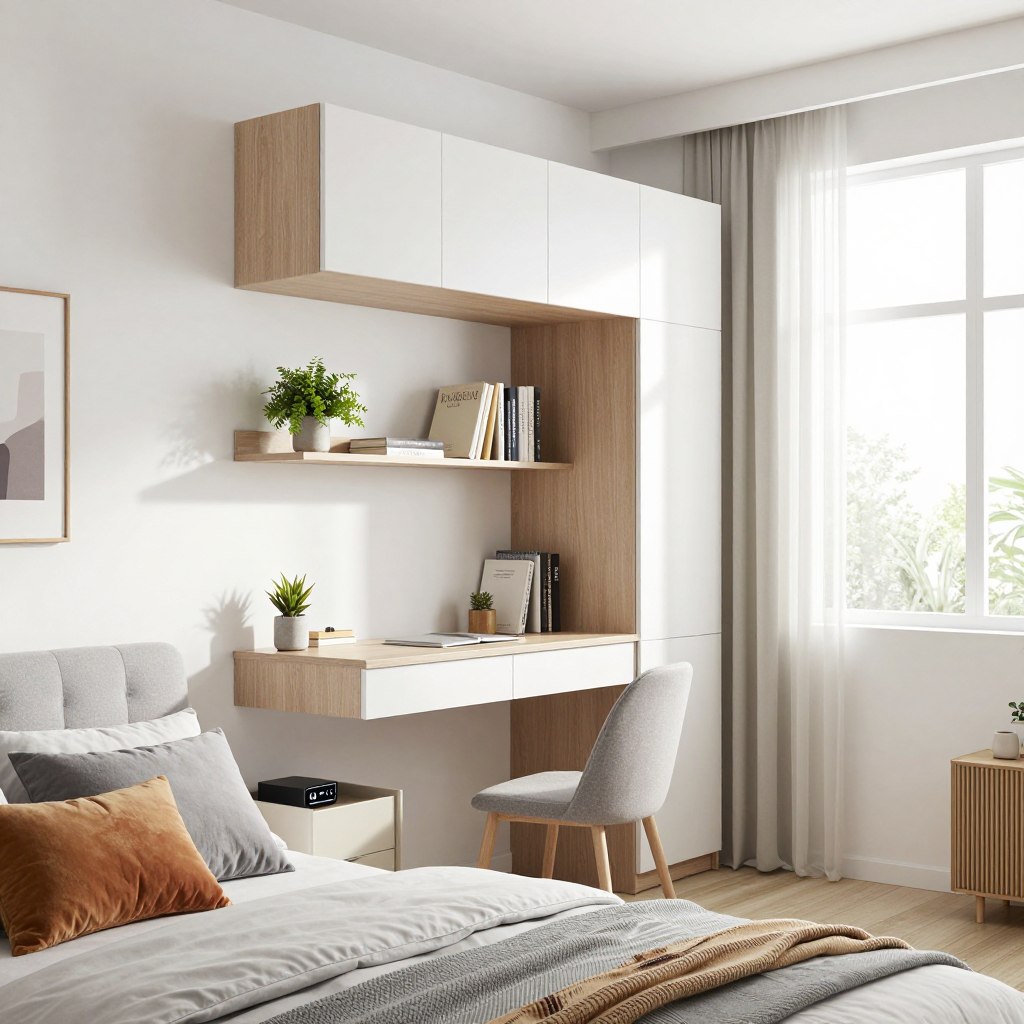
Many Americans face challenges with small bedrooms in apartments, condos, and older homes. You don’t have to sacrifice style or comfort in your compact space. With smart choices and creative planning, you can make any small bedroom a beautiful retreat.
Decorating a small bedroom is all about making smart decisions. You’ll learn how to pick the right colors, choose furniture that fits, and use storage wisely. This guide will help you create a room that feels bigger and looks amazing.
Knowing how to decorate a small bedroom opens up many possibilities. Whether you’re on a tight budget or want to splurge, you’ll find tips that fit your needs. Your small space can shine with personality and function.
Before you start buying furniture or picking paint, really get to know your space. Many people decorate without first understanding their room. This can lead to wasted money and frustration.
Start by knowing your room’s dimensions and unique features. This way, you can make choices that work well with your bedroom.
This step is like laying the groundwork for success. Your small bedroom has hidden talents waiting to be found. The goal is to find both the challenges and the benefits of your space. By doing this carefully, you’ll avoid making costly mistakes later.
Begin by measuring everything in your bedroom. Use a tape measure to get exact numbers for:
Write these measurements down or create a simple floor plan. Free tools like RoomSketcher or Floorplanner make this easy. Knowing exact dimensions helps avoid buying furniture that won’t fit. Small bedroom layout tips stress the importance of precision in measurement.
Consider your ceiling height when planning. Rooms with lower ceilings need different decorating strategies. Note where light switches, outlets, and heating vents are on your walls. These details are important when placing furniture.
Look beyond the obvious in your room. Every bedroom has something special. Windows that let in natural light are a big plus. Beautiful molding, hardwood floors, or a cozy alcove are also great features.
Make a list of what makes your bedroom special:
| Feature Type | Description | Decorating Potential |
|---|---|---|
| Natural Light Sources | Windows, skylights, glass doors | Frame windows with light curtains, use mirrors nearby to amplify light |
| Architectural Details | Crown molding, baseboards, wainscoting | Paint to complement, use as visual interest points |
| Ceiling Characteristics | High ceilings, unique angles, exposed beams | Draw eyes upward with vertical décor, reduce visual weight |
| Floor Materials | Hardwood, tile, or original flooring | Showcase with area rugs, keep clean and minimal |
| Unique Spaces | Alcoves, nooks, recessed areas | Create reading corners, add seating, hang floating shelves |
These features are your decorating anchors. Focusing on your room’s natural beauty makes its small size less noticeable. Small bedroom layout tips work best when they enhance your room’s strengths.
“The best decorating starts with understanding what you’re working with, not fighting against it.”
Use this time to change your view. Your small bedroom is not a limitation—it’s a chance to create a space that truly reflects you.
Color is key in making your small bedroom look and feel great. The right colors can make walls seem to disappear, ceilings look higher, and your space feel bigger and more welcoming. When picking colors for your small bedroom, it’s a big decision. Knowing how different shades work in small rooms helps make your bedroom feel spacious, not cramped.
Light and neutral colors are popular for small bedrooms. Soft whites, pale grays, beiges, and pastels reflect light well and make the room feel airy. Brands like Benjamin Moore offer shades like “Classic Gray” for a sophisticated look without being dull. Sherwin-Williams’ “Sea Salt” adds a calm, peaceful vibe to small bedrooms.
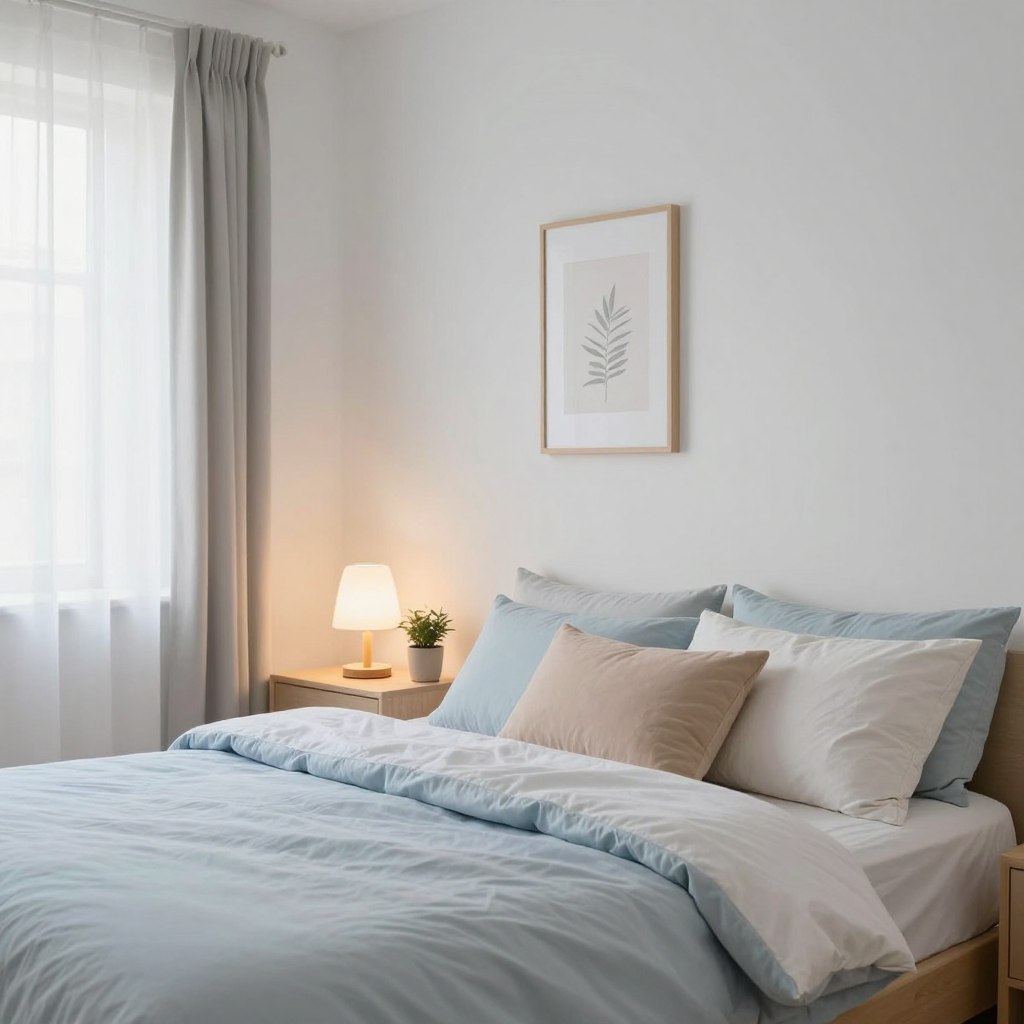
Don’t just stick to white walls. Darker, richer colors like navy, forest green, and deep charcoal can make a small bedroom cozy and relaxing. Use these colors on accent walls to keep your space feeling intentional and controlled.
Try a monochromatic color scheme for your small bedroom. This means using different shades of one color. A monochromatic design adds depth without clutter. You could use light gray, medium gray, and charcoal gray to define different areas while keeping the room cohesive.
| Color Strategy | Best For Small Bedrooms | Visual Effect |
|---|---|---|
| Light Neutrals (Whites, Creams) | Creating open, airy spaces | Reflects light, expands room feel |
| Pale Grays and Soft Blues | Adding subtle color without heaviness | Calming, slightly cooler appearance |
| Warm Beiges and Taupes | Building cozy yet open environments | Welcoming, naturally warm tones |
| Navy or Forest Green Accents | Creating focal points on one wall | Sophisticated, intimate feeling |
| Monochromatic Shades | Building depth with one color family | Cohesive, sophisticated appearance |
Use the 60-30-10 color rule for your small bedroom. This means 60 percent of your room is one color, 30 percent another, and 10 percent an accent color. This balance keeps your small space from feeling overwhelming. Your walls could be 60 percent, bedding 30 percent, and decorative items 10 percent.
Your ceiling is important in small bedroom decorating. Painting it slightly lighter than your walls or adding a subtle tint makes the room feel taller. Some designers suggest painting ceilings the same color as walls for a unified, expansive look.
Trust your instincts when picking colors for your small bedroom. Your bedroom should be a personal sanctuary that shows your style. The colors you choose set the tone for all other decorating decisions, making this step very important.
Choosing the right furniture is key when decorating a small bedroom. The right pieces can turn a small space into a cozy retreat. Space-saving furniture not only fits but also works smarter for you.
By picking furniture that does more, you improve flow and make your room feel bigger. This is how you turn a small bedroom into a functional space.
Instead of buying furniture that looks good but does only one thing, look for pieces that do it all. This saves space and gives you everything you need.
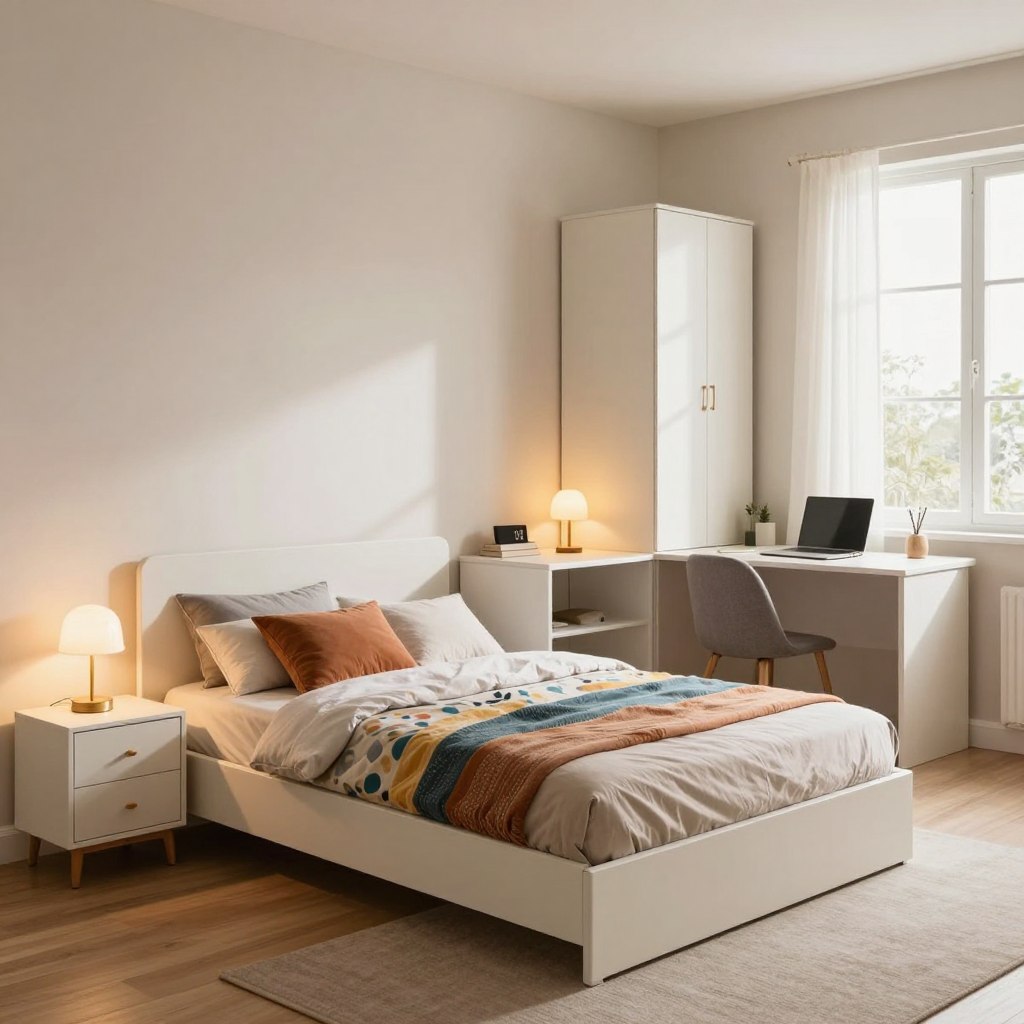
Double-duty furniture is essential in small bedrooms. Look for items that offer both storage and style. A bed with drawers saves space and keeps your clothes organized.
Ottomans that open for storage are great for hiding blankets and pillows. They also provide a place to sit. Nightstands with shelves keep your essentials within reach and organized.
Wall-mounted desks are perfect for a workspace. They fold away when not in use. Murphy beds offer the ultimate solution for flexibility.
Consider these practical options:
Proportion is critical in small spaces. Big furniture makes a room feel cramped. Choose pieces that fit your room’s size.
Your nightstand should match your mattress height. Leave enough space around your bed for easy movement. This makes your bedroom comfortable and functional.
Look for furniture designed for small spaces. Brands like CB2 and Article offer compact pieces. These brands know that furniture should fit the room, not just be small.
| Furniture Type | Space-Saving Benefit | Ideal Dimensions |
|---|---|---|
| Slim Nightstand | Minimizes floor footprint | 16-20 inches wide |
| Low-Profile Bed Frame | Makes room feel taller | 14-16 inches off ground |
| Compact Dresser | Provides storage vertically | 30-36 inches wide |
| Wall-Mounted Shelving | Eliminates floor clutter | Customizable width |
Remember: furniture should make your room better, not worse. Measure your space before buying. Know your doorway width, wall lengths, and walking space. Smart furniture selection turns small bedrooms into cozy, functional spaces.
Most people focus on floor space when trying to maximize small bedroom space, but they miss the real goldmine above their heads. Your walls and ceiling offer tremendous opportunities for storage and decoration that remain underutilized. By thinking vertically, you can transform your bedroom into a more spacious and organized retreat without cluttering the floor.
The magic of vertical design lies in how it tricks the eye. When you draw attention upward, your room feels taller and more open. This simple visual shift creates the illusion of spaciousness, making your small bedroom feel less cramped and more inviting.
Getting started with vertical storage is easier than you think. Consider these effective strategies to maximize small bedroom space:
Balance matters when you maximize small bedroom space with vertical storage. Keep lighter items and things you rarely use on upper shelves. Use matching bins or baskets throughout your vertical storage to create a unified, cohesive look that feels intentional.
| Vertical Storage Option | Best For | Space Saved | Cost Level |
|---|---|---|---|
| Floor-to-ceiling shelving | Books, decorative items, daily essentials | Maximum | Medium to High |
| Floating shelves | Display items, plants, small storage | High | Low to Medium |
| Tall dressers | Clothing and personal items | High | Medium |
| Wall hooks and pegboards | Accessories, bags, frequently used items | High | Low |
| Loft bed | Sleeping space with storage underneath | Maximum | High |
| Over-the-door organizers | Small items, shoes, cleaning supplies | Medium | Low |
Your vertical strategy should feel exciting, not overwhelming. Start with one wall or corner to maximize small bedroom space, then expand your approach. This gradual method helps you discover what works best for your lifestyle and aesthetic preferences.
Storage in a small bedroom doesn’t have to be dull or messy. You can find clever ways to hide items while keeping your room welcoming. The right storage solutions mix usefulness with style. They hide your stuff while adding to your room’s look.
Many people miss out on hidden spots in their bedrooms. Your room has lots of space for storing clothes, books, and more. The secret is finding storage that fits your style, not clashes with it.
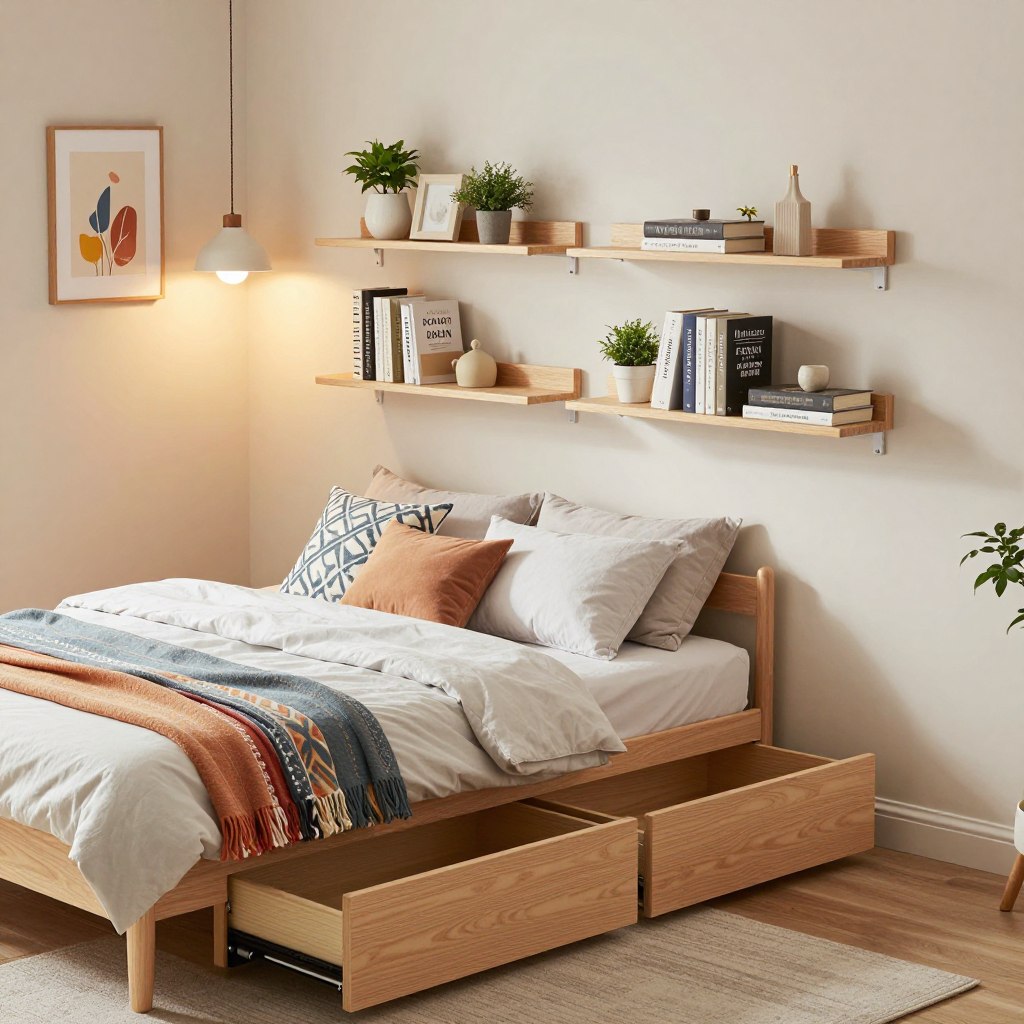
The space under your bed is a goldmine. Sterilite’s rolling bins fit under platform beds and keep things tidy. Vacuum-sealed bags are perfect for seasonal clothes or bedding, as they shrink items into flat packages.
Bed risers add height for bigger containers. If your bed has an open frame, you can use decorative boxes and baskets that add flair. IKEA’s Malm storage bed has a hydraulic lift that opens from the top, turning your bed into storage.
Use labels to keep under-bed storage organized. Rotate seasonal items to keep everything fresh.
Wall-mounted solutions free up floor space. Urban Outfitters’ floating nightstand shelves offer room for books and decor without taking up floor space. Wall-mounted reading lights also eliminate the need for bedside lamps.
Decorative wall hooks can hold bags, jewelry, or hats in a stylish way. Mounted magazine racks or book ledges display your favorites while saving shelf space. Fold-down wall tables serve as desks or vanities when needed.
| Storage Type | Best For | Style Benefits |
|---|---|---|
| Floating Shelves | Books and decor | Clean, modern look |
| Wall Hooks | Jewelry and bags | Adds visual interest |
| Fold-Down Tables | Workspace | Hidden when not needed |
| Wall Lights | Bedside lighting | Saves surface space |
Small bedroom storage solutions work best when they match your room’s style. Choose finishes that match your walls and furniture. This way, your storage becomes part of your design, not an eyesore.
The key is making storage invisible or beautiful enough to display openly. Smart placement and stylish containers turn necessary storage into decorative elements that enhance your small bedroom.
Decorating a small bedroom is easier with a clear plan. You need to combine all your design choices into one space. This space should feel personal and welcoming. We’ll guide you through making your small room a beautiful retreat.
Begin by clearing out your room. Remove anything that doesn’t bring you joy. This step is key to decorating a small bedroom well. A clean space lets you see your room’s true size and possibilities.
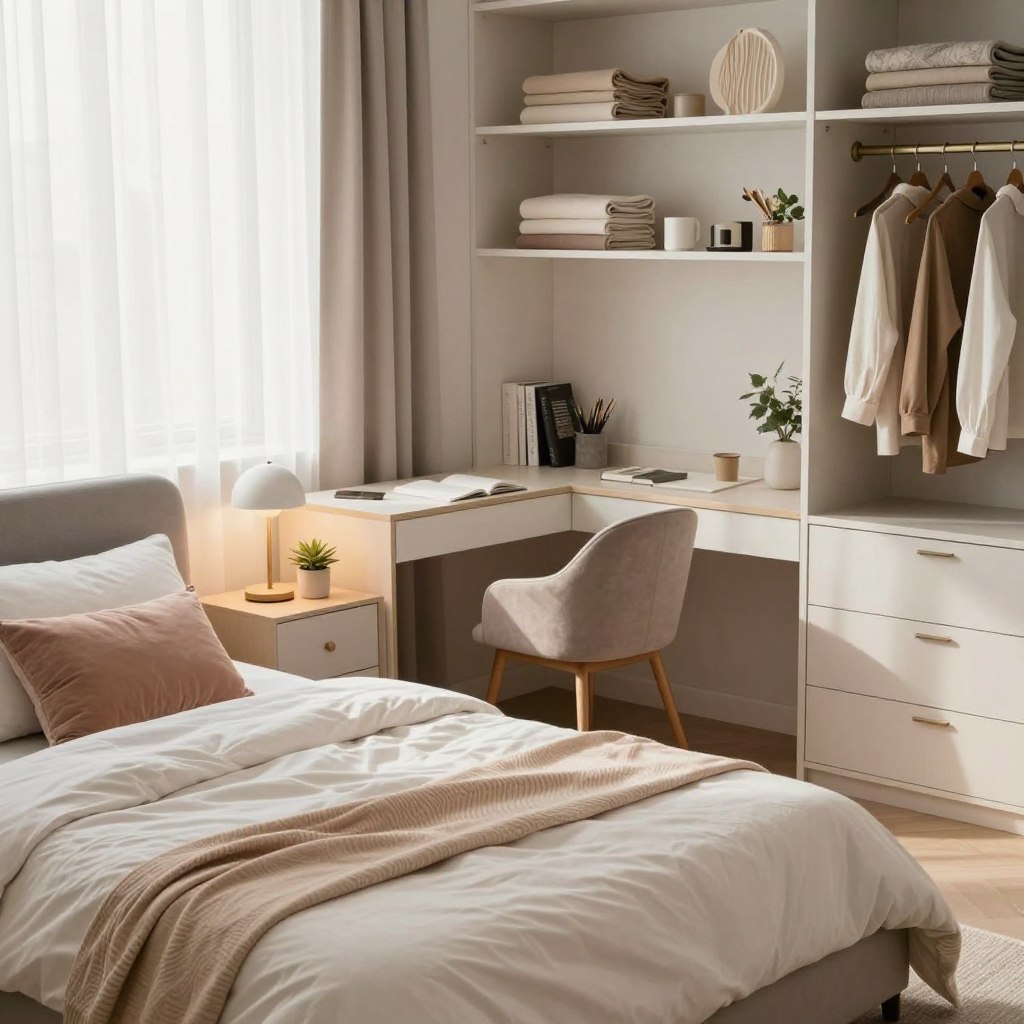
Then, pick a focal point. Usually, it’s your bed. Arrange other furniture around it for balance. This plan helps you design the rest of your space.
Here are some practical decorating steps:
Think about creating functional zones. A cozy reading nook with a chair and lamp saves floor space. A small desk that also serves as a vanity makes your room more useful.
Respecting empty space is key to decorating a small bedroom. Open areas make rooms feel bigger and less cluttered. Show only items that truly matter to you, creating a peaceful space that shows your style and personality.
Lighting is a key tool for making small bedrooms look bigger. The right lighting can change a room’s feel. It makes your bedroom look bigger, brighter, and more welcoming.
Good lighting gets rid of dark corners and harsh shadows. This makes your room feel less cramped. Choosing the right lights works with your furniture and colors to make your room feel airy.
Lighting does more than just help you see. It affects how you feel about your room’s size and atmosphere. Mixing different light sources adds depth and interest, making your room feel bigger.
For a small bedroom, layering light is key. You need three types of lighting:
Using multiple light sources at different heights makes your room feel less flat. Dimmable options let you adjust the brightness. Choose warm-toned bulbs to create a cozy atmosphere.
| Light Type | Purpose | Best Placement | Recommended Products |
|---|---|---|---|
| Ambient | General illumination throughout the room | Ceiling, recessed in walls | Philips Hue smart bulbs, ceiling fixtures |
| Task | Light for specific activities like reading | Beside bed, above desk, beside chair | Wall-mounted swing-arm lamps, reading lights |
| Accent | Highlights features and adds visual depth | Under shelves, above artwork, corners | LED strip lights, picture lights, decorative lamps |
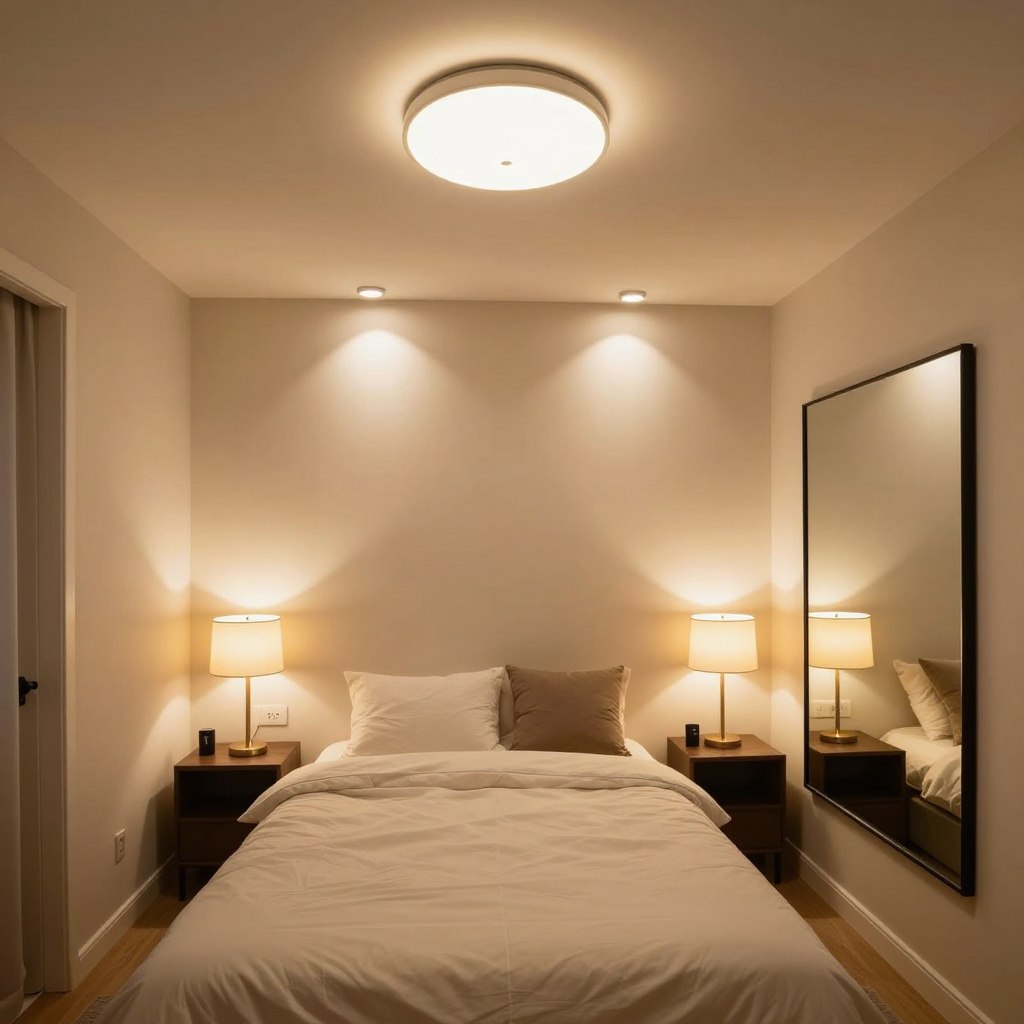
Mirrors are great for making small spaces feel bigger and brighter. Place mirrors opposite or next to windows to bounce natural light. This trick uses natural light to make your room feel fresher and more spacious.
Here are some mirror ideas for your bedroom:
Placing mirrors correctly changes how light moves in your bedroom. Morning sunlight bouncing off mirrors brightens up corners and dark areas. This trick is free if you already have mirrors, but it makes a big difference in making your space feel open.
Your bed is the biggest piece of furniture in your room. It affects how your bedroom looks and works. Choosing the right bed means finding a balance between comfort and using your space wisely.
In small bedrooms, picking the right bed size is key. A queen bed might be too big for tiny rooms. Instead, consider a full-size or twin XL bed. They offer comfort without taking up too much space.
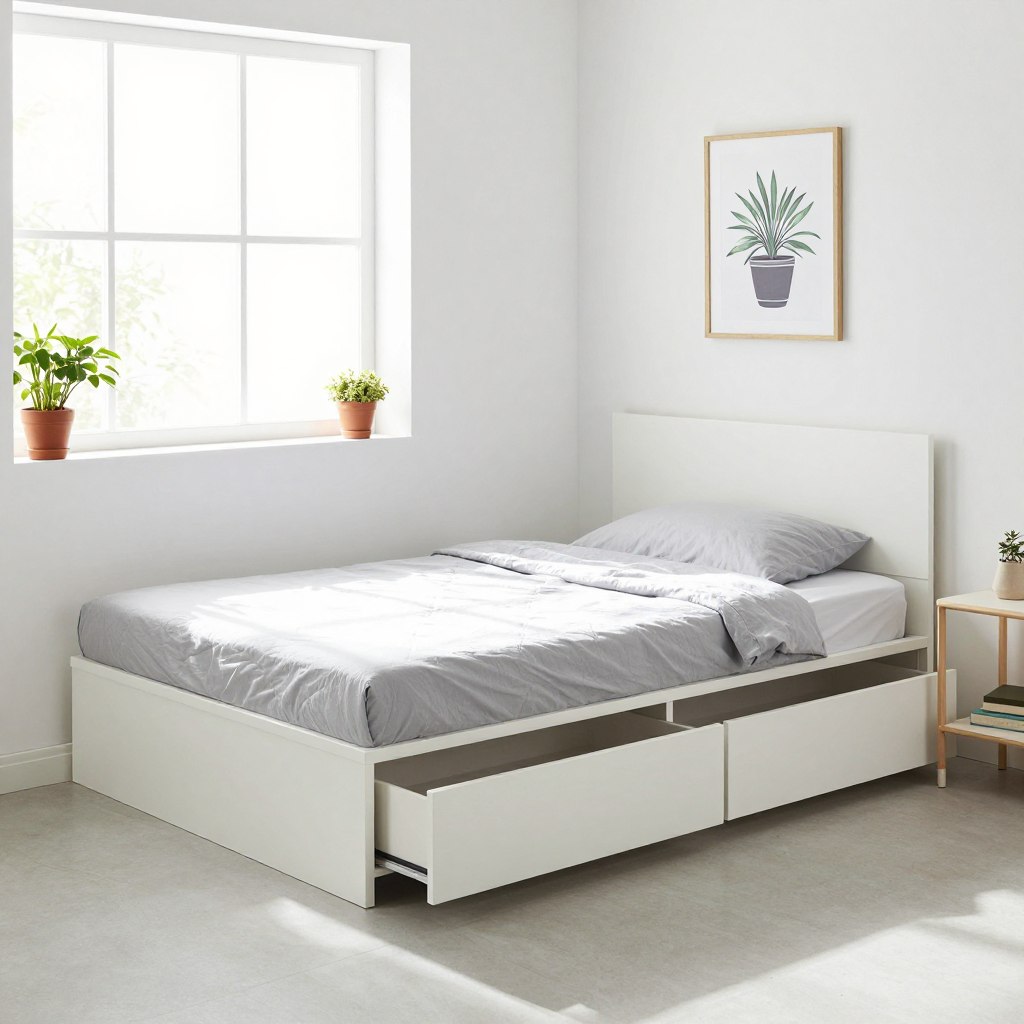
Where you put your bed is as important as which one you choose. Placing it in the center of the longest wall is a good idea. Floating it away from walls adds style if your room is big enough. Putting it in a corner or alcove saves floor space for other furniture.
Don’t choose big, bulky headboards in small spaces. Instead, go for wall-mounted or painted headboards. They add style without taking up too much room. These choices show you can have a great night’s sleep without sacrificing space.
Textiles and soft furnishings add warmth and comfort to your bedroom. They don’t take up much space. Fabrics help you show your style and make a small room cozy. They add interest without the bulk of furniture.
Choosing the right textiles can make your bedroom feel bigger. Colors, patterns, and textures all play a role. Using them wisely makes your room feel luxurious and inviting, no matter its size.
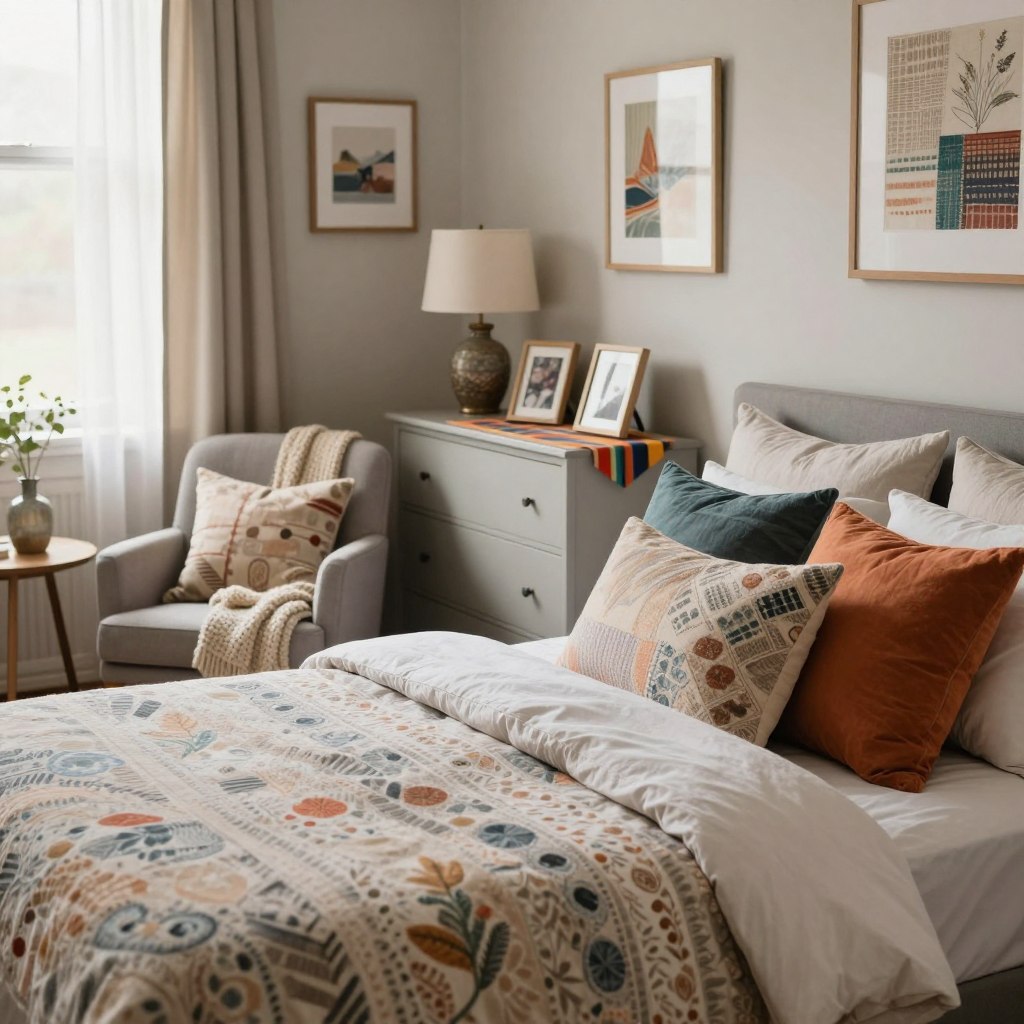
Your bedding sets the room’s tone. Light-colored bedding makes spaces feel open and peaceful. Neutral tones let your eyes travel across the room smoothly.
When picking bedding, keep these tips in mind:
Brands like Parachute and Brooklinen offer quality bedding in simple designs. A duvet with a subtle pattern becomes your room’s focal point. Layering lightweight textiles creates depth without the bulk of a thick comforter.
Rugs define space and add softness underfoot. But size is key. A rug that’s too small makes your room feel cramped. The right rug size extends at least 18-24 inches beyond each side of your bed.
Here are some rug options for small bedrooms:
| Rug Type | Best For | Visual Effect |
|---|---|---|
| Natural fiber (jute or sisal) | Adding texture without weight | Light, airy, grounded |
| Light-colored rugs | Blending with flooring | Continuous, spacious feel |
| Washable rugs (Ruggable brand) | Easy maintenance in small spaces | Practical and clean-looking |
| Runner rugs | Extremely tight spaces | Defined path, minimal coverage |
Runner rugs are great for very tight spaces. They provide a soft feel along the bedside without overwhelming your floor. Natural fibers like jute add texture and warmth while staying visually light.
Textiles let you show personality and comfort in a small bedroom. Every piece you choose brings style without taking up space. This makes your room feel bigger and more inviting.
Creating a beautiful bedroom doesn’t have to cost a lot. Decorating on a budget is easier in small spaces. You need fewer items, which means less money spent.
Start by looking for secondhand treasures. Thrift stores, estate sales, and online marketplaces have affordable furniture. A $30 dresser can look new with a fresh coat of paint. This way, you save money and add character.
Paint is a cheap but powerful way to change a room. An accent wall or refreshed furniture costs under $50. It makes a big difference. Peel-and-stick wallpaper is another affordable option without the long-term commitment.
Here are some ways to save:
| Budget Level | Total Cost | What You Get |
|---|---|---|
| Small Budget | $300–$500 | Paint, thrift furniture, DIY art, plants, discount store accessories |
| Medium Budget | $500–$800 | All above plus quality bedding and one statement piece |
| Larger Budget | $1,000+ | New furniture, premium bedding, professional lighting, and decor items |
Smart shopping turns bedroom decorating on a budget into a fun adventure. Every dollar spent lets you show your style while staying within your budget.
Decorating a small bedroom can be tricky. Many people make the same mistakes, wasting time and money. Knowing these mistakes helps you create a peaceful, spacious bedroom instead of a cramped one.
The biggest mistake is stuffing too much into your bedroom. When trying to make a small space bigger, less is more. Pushing furniture against walls might seem smart, but it makes rooms feel smaller.
Common mistakes include:
Embrace negative space as your decorating partner. Follow the “one in, one out” rule for decorative items. This keeps your room balanced and prevents overcrowding.
Clutter in small spaces feels worse. A messy small bedroom looks more chaotic than a messy large one. Decluttering is a continuous effort to keep your space organized.
Start with these decluttering strategies:
| Decluttering Method | How It Works | Time Frame |
|---|---|---|
| Six-Month Rule | Remove anything unused in six months (except seasonal items) | Initial purge: 1-2 weeks |
| Daily Tidying Habits | Make your bed each morning and put clothes away immediately | Ongoing: 10 minutes daily |
| Container Concept | Use storage containers to limit how much you keep in each category | Ongoing maintenance |
| Seasonal Decluttering | Review your belongings every three months and remove what you do not need | Quarterly: 2-3 hours per session |
The KonMari method from Marie Kondo focuses on keeping only items that spark joy. Many find this helpful for small spaces. A minimalist mindset also works well in compact rooms.
“The life-changing magic of tidying up is that your room becomes peaceful because you have removed everything that does not serve your space.”
Maintaining a clutter-free small bedroom requires effort, but the rewards are huge. You’ll sleep better in a peaceful, organized space. Your room will feel larger and more inviting. Daily tidying habits keep clutter away. Make decluttering a regular practice, not an emergency project, and you’ll protect your beautiful bedroom design.
You’ve learned a lot about decorating a small bedroom. You now know how to make the most of your space. This includes choosing the right colors and furniture.
You’ve also found ways to make small spaces look bigger. This includes smart storage, lighting tricks, and textile choices. Plus, you know how to avoid common mistakes to keep your room feeling open.
Your small bedroom is not a problem. It’s a chance to create something special. A small bedroom can be cozy and personal with the right decor.
Remember to assess your space before buying anything. Choose colors that reflect light. Pick furniture that does more than one thing.
Use your vertical walls, store smart, and layer your lighting. Keep clutter out. These steps help make your room feel spacious and comfy.
Start your decorating project with patience. You don’t have to do everything at once. Begin with big changes like painting walls and clearing out clutter.
Then, move on to furniture and accessories. Breaking the work into phases makes it less overwhelming and more fun.
Your small bedroom can become your favorite place in your home. It can be a personal sanctuary that shows who you are. Embrace the creative challenge of decorating in tight quarters.
Small spaces often spark the most clever and beautiful design ideas. With the right approach, your bedroom will feel like the perfect retreat.