Address
304 North Cardinal
St. Dorchester Center, MA 02124
Work Hours
Monday to Friday: 7AM - 7PM
Weekend: 10AM - 5PM
Address
304 North Cardinal
St. Dorchester Center, MA 02124
Work Hours
Monday to Friday: 7AM - 7PM
Weekend: 10AM - 5PM


Discover gorgeous farmhouse kitchens that blend rustic charm with modern style. Get inspired by beautiful designs, cozy details, and timeless ideas for your home.
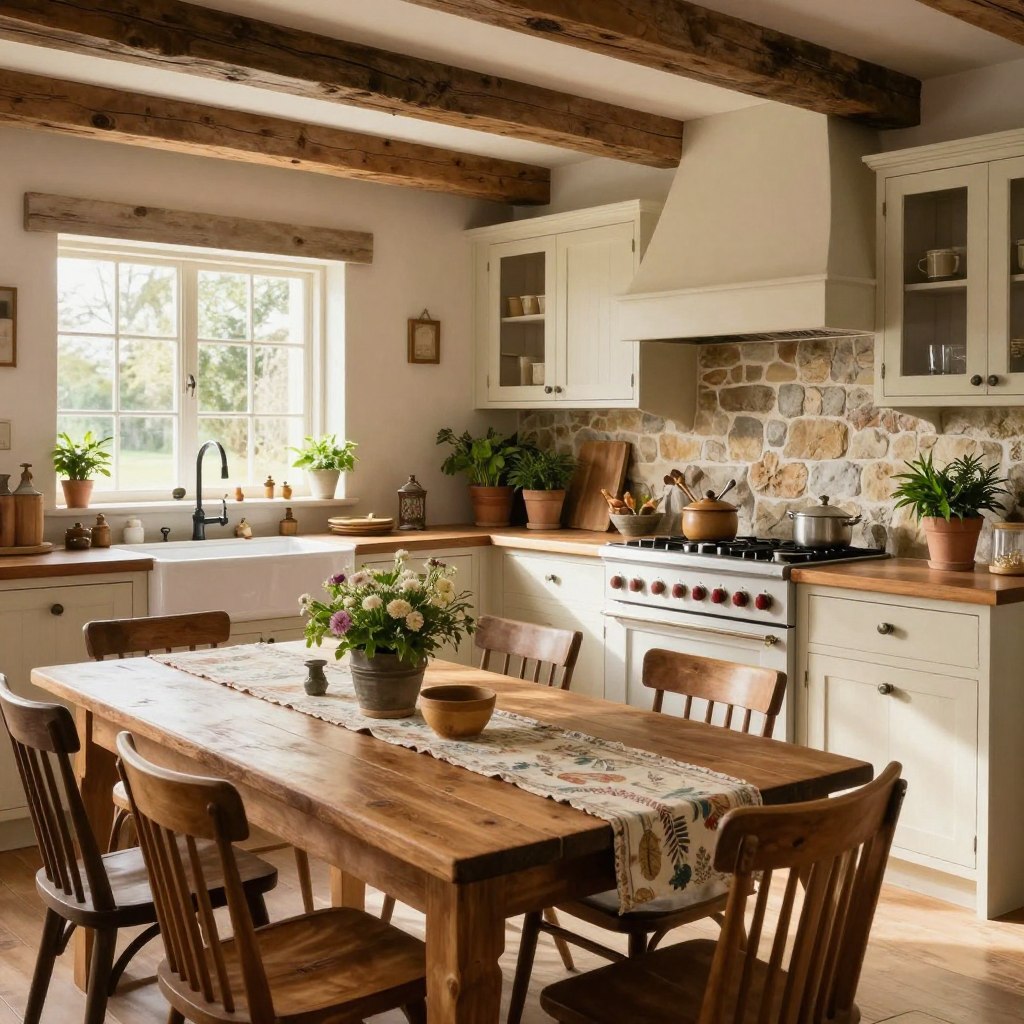
Gorgeous farmhouse kitchens add warmth and character to homes across America. They mix rustic charm with modern convenience, feeling both timeless and fresh. These kitchens make homes feel welcoming.
Country kitchen style is now popular in cities and suburbs, not just rural homes. It looks great in any setting, from countryside estates to urban apartments.
So, what makes farmhouse kitchens so appealing? It’s their honest beauty. They use natural materials, warm colors, and vintage touches. These kitchens are perfect for family and friends to gather and share meals.
This article will show you what makes farmhouse kitchens special. You’ll learn about architectural elements like shiplap walls and reclaimed wood beams. You’ll also find out how to pick the right cabinets, sinks, and lighting fixtures.
Whether you’re looking to renovate your kitchen or just add rustic touches, you’ll find helpful ideas here. Country kitchen style is flexible. You can make it fit your taste and lifestyle.
Gorgeous farmhouse kitchens have won over many homeowners for years. They evoke a deep desire for authenticity, warmth, and simpler times. This style combines the charm of the past with today’s modern needs.
So, why do people love farmhouse kitchens? They feel welcoming and cozy, unlike cold, sterile spaces. These kitchens value real materials and craftsmanship over quick fixes. They celebrate the beauty of imperfections, like a worn wooden beam or a weathered cabinet.
Rustic kitchen design fits any home. It works in historic farmhouses and modern suburban homes alike. This style is flexible and can fit any budget.
Here’s what makes farmhouse kitchens timeless:
The farmhouse kitchen represents a return to genuine living. People want homes that feel real, not overly styled. Gorgeous farmhouse kitchens offer this authenticity while being perfect for today’s families.
Creating a farmhouse kitchen isn’t about strict rules. It’s about making your home’s heart feel warm and welcoming.
To make a stunning farmhouse kitchen, you need to know the key features. A country kitchen style is all about being real and cozy. It’s where every part works together to make a space that feels lived-in and thoughtful. The best rustic kitchen design mixes natural beauty with usefulness, making it a welcoming place for family and friends.
Think about how different elements come together to create a design. The right mix of materials, colors, and fixtures turns an ordinary kitchen into a beautiful farmhouse retreat. Let’s look at the basic pieces that make this happen.
Real rustic kitchen design uses organic materials for character and depth. Wood, stone, and metal create a solid base that feels timeless.
Mixing textures adds interest. Combining smooth marble with rough wood beams gives your kitchen depth and personality. Unfinished wood against polished metal hardware creates a nice contrast that catches the eye.
Farmhouse kitchens use colors that feel welcoming and calm. Start with whites and creams to brighten your space.
| Color Category | Examples | Best Used For |
|---|---|---|
| Neutrals | White, cream, soft gray | Cabinets and walls |
| Cool Tones | Sage green, soft blue | Accent walls and accessories |
| Warm Tones | Warm gray, tan, beige | Textiles and decor |
| Deep Accents | Navy, charcoal, deep green | Hardware and trim |
Balance light backgrounds with darker accents to avoid flatness. A cream-colored cabinet with navy hardware adds visual pop. Soft blues and sage greens are great for accent walls without overwhelming your kitchen.
Small details make big impacts in country kitchen style. Cabinet pulls, faucets, and door handles are the kitchen’s jewelry.
These hardware choices work with your materials and colors to create harmony. When picking fixtures for your rustic kitchen, think about how they fit with your overall look. Mismatched finishes add character, showing your kitchen evolved naturally over time. Each piece, from cabinet knobs to faucet spouts, adds to the authentic farmhouse feel that makes your kitchen beautiful.
Shiplap kitchen walls are key in farmhouse design. They feature horizontal wooden boards with unique grooves. This look is both charming and rustic, making kitchens feel welcoming.
Shiplap is made of wooden planks with edges that overlap. This design adds clean lines and interest to your kitchen walls. You can use shiplap on a whole wall, as a backsplash, on an island, or even the ceiling for a bold look.
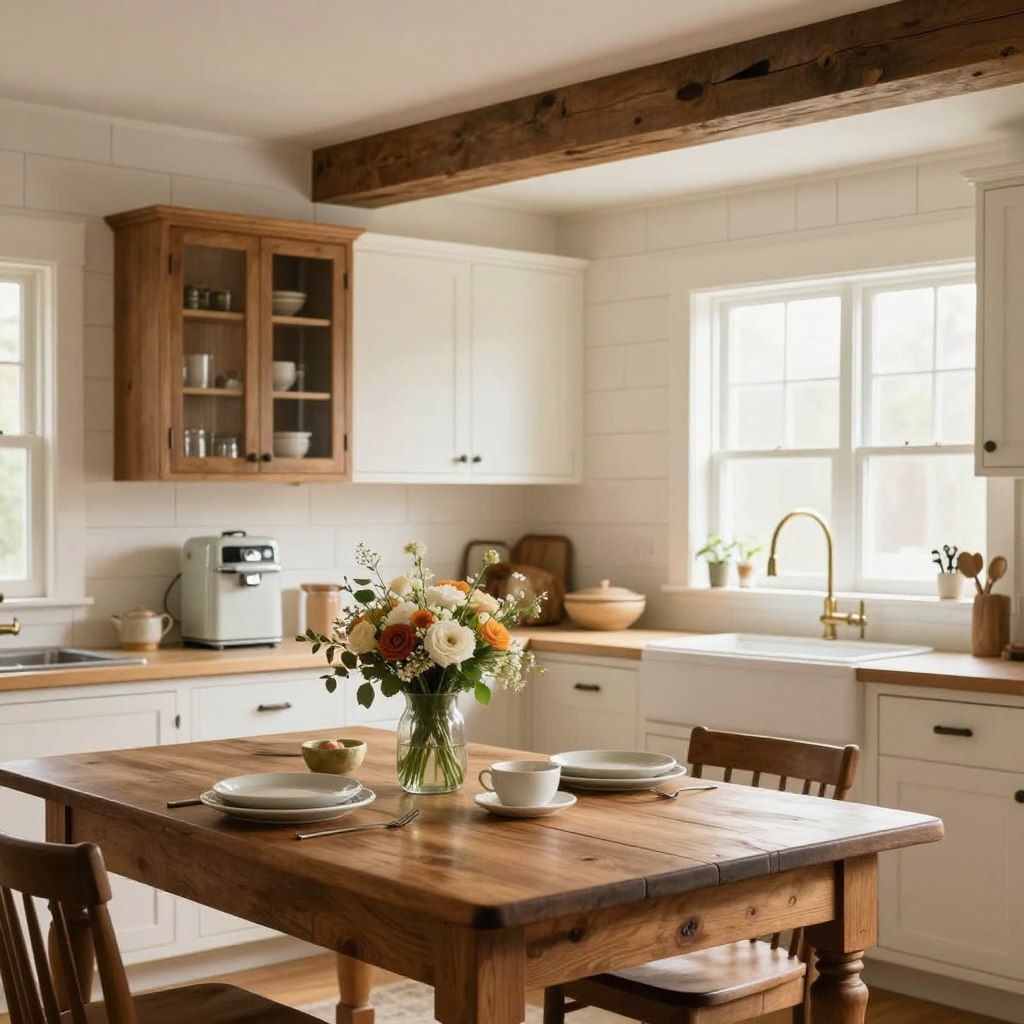
Color choices matter when planning shiplap kitchen walls. White is the classic choice, bringing brightness. Natural wood tones add warmth. Soft greens or pale blues offer a modern twist.
Installing shiplap can be DIY if you’re handy. Professionals ensure it’s done right. The right spacing is key for that farmhouse look.
Begin with one accent wall if unsure. Many expand to full coverage. Shiplap walls add timeless charm to any farmhouse kitchen.
Your farmhouse kitchen cabinets are the heart of your kitchen. They take up a lot of space, so picking the right style, color, and finish is key. The right cabinets can make your kitchen feel bright or cozy. Knowing your options helps you create a space that shows off your style while staying true to farmhouse charm.
Choosing the right cabinets involves thinking about color, door style, and finish. Your budget and how fast you need them also play a part. Let’s look at the main styles that fit well in farmhouse kitchens.
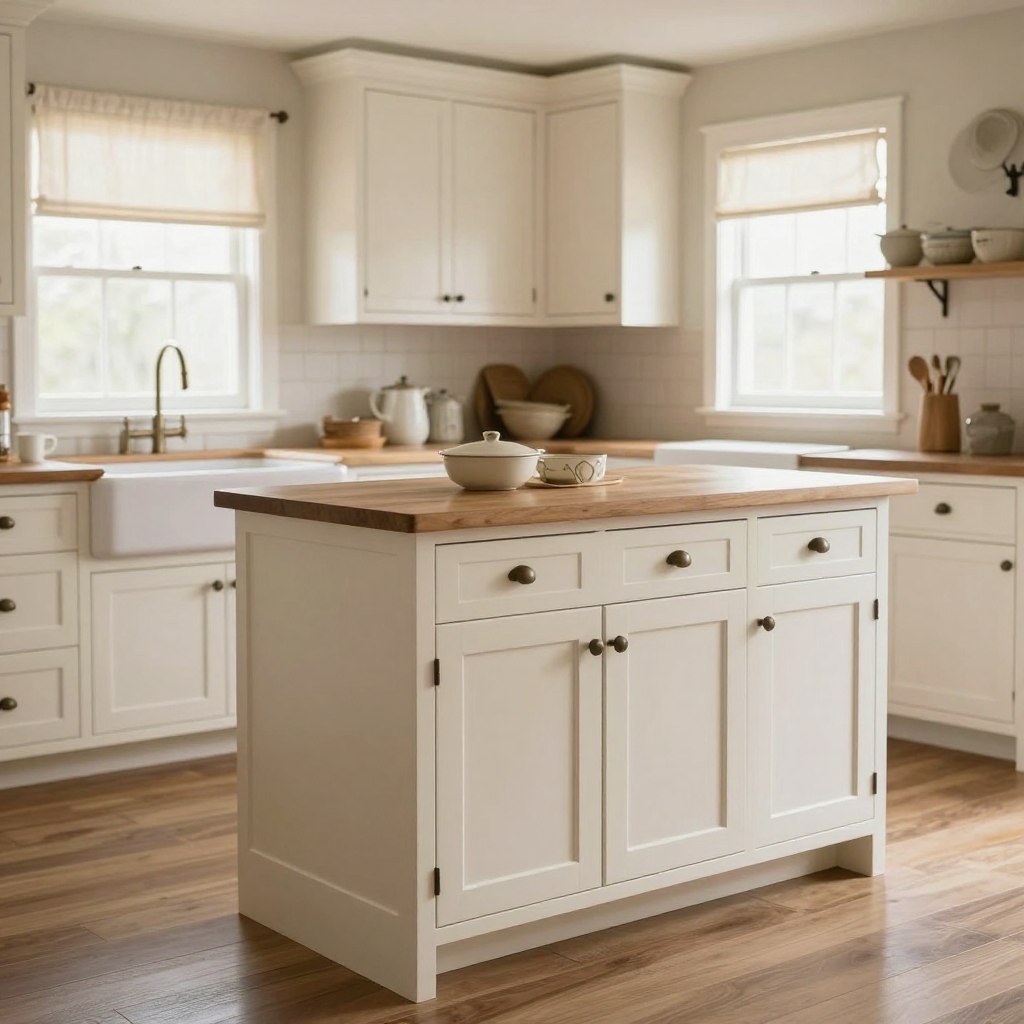
White and cream cabinets are the top picks for a reason. They brighten up your kitchen and provide a clean base for other colors. White cabinets match almost any accent color, from blues to earth tones.
Door styles are important when picking white cabinets. Here are some popular ones:
Cream-colored cabinets offer a softer look than white. They add warmth while keeping the kitchen light and inviting.
Two-tone cabinets are getting more popular in farmhouse kitchens. This trend mixes cabinet colors in your space.
Some favorite two-tone combos include:
| Upper Cabinets | Lower Cabinets | Best For |
|---|---|---|
| White | Navy Blue | Classic, coastal farmhouse feel |
| White | Gray | Neutral, contemporary farmhouse |
| White | Black | Bold, modern farmhouse style |
| Cream | Dark Green | Rustic, nature-inspired kitchens |
| Light Gray | Charcoal Gray | Subtle, monochromatic design |
Many people choose a different color for the kitchen island. This makes the island stand out. Make sure your two-tone cabinets look intentional and flow well in your kitchen.
Distressed cabinets give your kitchen a rustic, lived-in feel. These finishes add character and depth that polished cabinets can’t match.
Techniques for distressed finishes include:
You can buy pre-finished distressed cabinets or DIY the finish on your own. Pre-finished cabinets save time, while DIY offers customization and cost savings.
Your choice of cabinets depends on your style, budget, and vision. Each option has its own benefits, and there’s no one “right” choice. Pick cabinets that make you happy and fit your farmhouse kitchen dreams.
Reclaimed wood beams add real charm to farmhouse kitchens. They come from old barns and factories, bringing stories from the past. Each beam has its own look, with unique grain patterns and weathering marks.
These beams are more than just pretty. They help the environment by keeping old wood out of landfills. Homeowners love the look and the eco-friendly aspect.
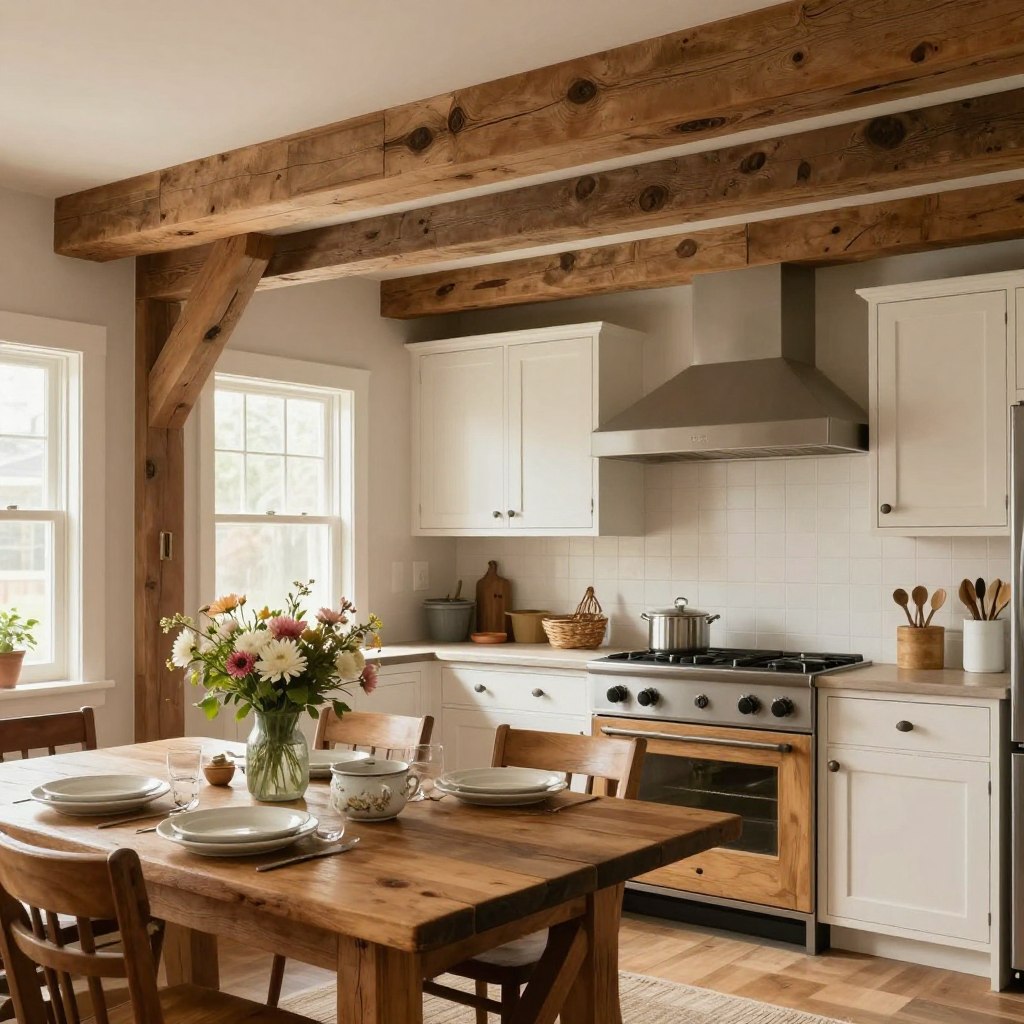
When looking for reclaimed wood beams, you have several options. Architectural salvage yards have authentic materials. Online marketplaces like Etsy offer a wide selection.
It’s important to know the difference between structural and decorative beams. Structural beams need a pro to install. Decorative beams are easier to install and are great for renters or those on a budget.
| Beam Type | Installation Difficulty | Cost Range | Best For |
|---|---|---|---|
| Structural Reclaimed Beams | Professional required | $800-$3,000+ | Permanent installations, ceiling support |
| Decorative Faux Beams | DIY-friendly | $150-$600 | Renters, budget projects, accent areas |
| Reclaimed Accent Pieces | Simple installation | $100-$800 | Shelving, range hoods, wall treatments |
Before using reclaimed wood beams, they need to be treated. Cleaning removes dust and debris. Sealing protects the wood from moisture and oils, keeping it looking rustic.
Even small touches with reclaimed wood beams can make a big difference. A beam above a range hood or short shelves in an alcove adds farmhouse charm. These small projects show you can achieve farmhouse style without big changes.
Investing in reclaimed wood beams is worth it. They are unique and sustainable. While they cost more than new lumber, their timeless beauty and durability make them a worthwhile investment for homeowners.
Apron front sinks are key in farmhouse kitchen design. They have an exposed front panel that adds a bold look. The deep basin makes washing big pots and pans easier than regular sinks.
These sinks are not just about looks. They have a big interior for cleaning big jobs. You’ll use this sink a lot for meals and cleaning up. The apron becomes a focal point in your kitchen.
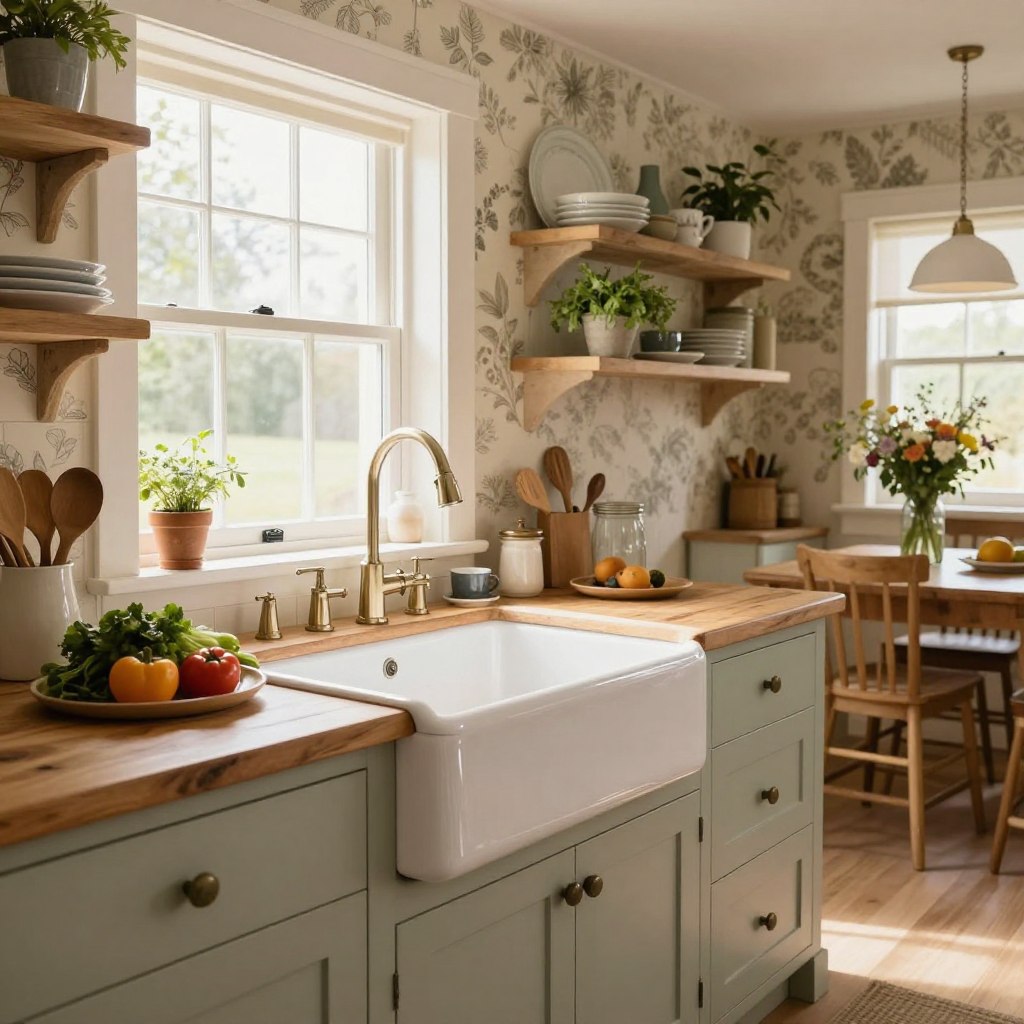
Material choice is important for apron front sinks. Each has its own benefits for your kitchen.
Choosing the right size for your apron front sinks is key. Most are 30 to 36 inches wide, fitting various kitchen sizes.
| Sink Width | Best For | Basin Configuration |
|---|---|---|
| 30 inches | Compact kitchens and smaller spaces | Single or divided basin |
| 33 inches | Standard farmhouse kitchens | Single or double basin |
| 36 inches | Large kitchens with ample counter space | Double basin with accessories |
Think about your cooking habits when choosing between single-basin and divided-basin sinks. Single-basin sinks have one big space for washing. Divided sinks have separate areas for dishes and rinsing veggies.
Measure your cabinetry carefully before buying apron front sinks. The apron extends into your kitchen differently than regular sinks. Proper measurement ensures a smooth installation and a perfect fit in your farmhouse kitchen.
Open shelving is key in farmhouse kitchens across America. It makes kitchens feel airy and welcoming. This style also makes kitchens look bigger and more inviting than closed cabinets.
Open shelving is great because it mixes practical storage with display space. You can show off your favorite dishes, vintage finds, and cookbooks. Plus, everything is within reach for daily cooking.
Farmhouse kitchens love open shelving because it adds to their casual vibe. Unlike traditional kitchens, open shelving shows off what you own. It turns everyday items into decorations that tell your home’s story.
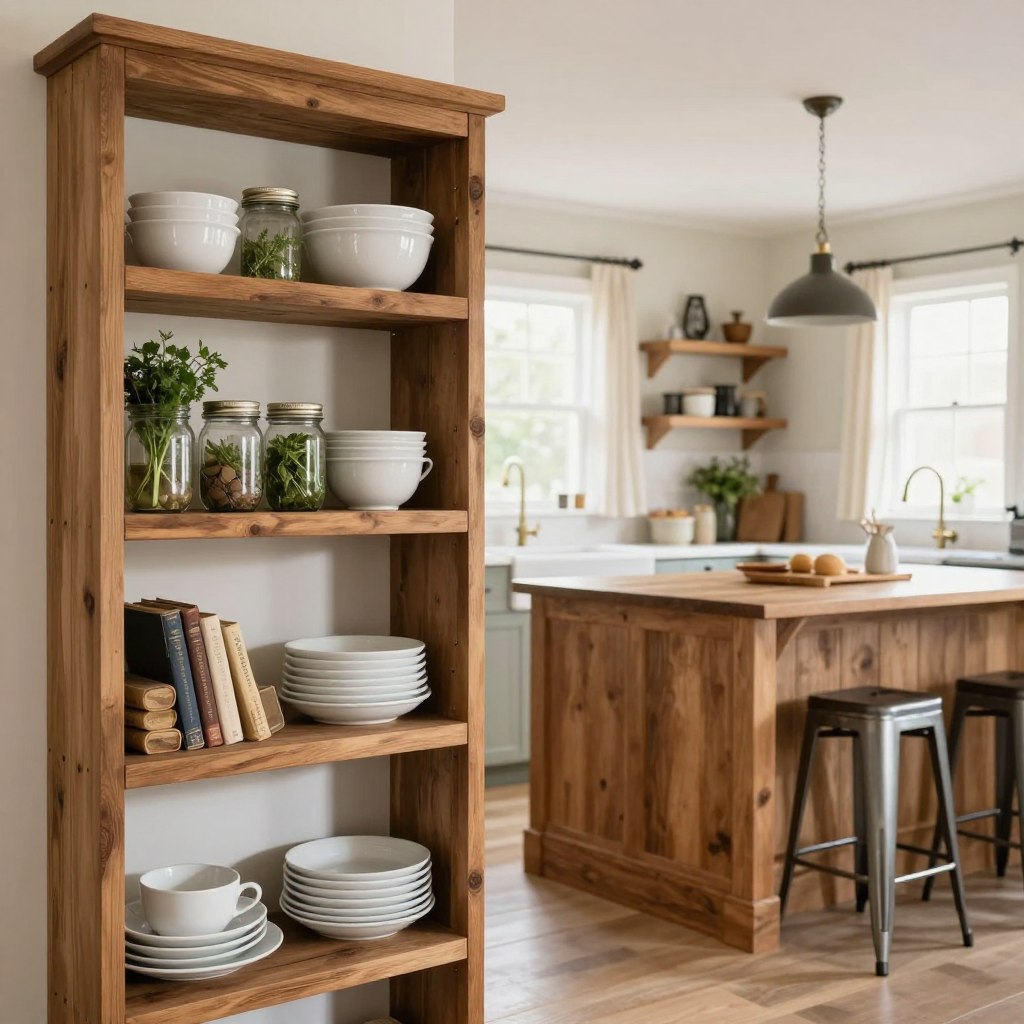
Material choices are important for open shelving. Reclaimed wood shelves add warmth and character. Use black iron or bronze brackets to enhance the rustic look. These materials complement the natural textures in your space.
Keeping open shelves tidy is key. Dust settles easily on exposed items, and cluttered shelves look messy. Style your shelves by grouping items thoughtfully. Display dishes in stacks, cookbooks casually, and add greenery or vintage pottery for interest.
Open shelving works best when you love what you display. Choose items you use and enjoy seeing every day. This way, your open shelves stay functional and beautiful in your farmhouse kitchen.
Farmhouse kitchen islands are the heart of your kitchen. They mix style with function, giving you more space to cook. They also become a natural spot for family and friends to gather.
A well-designed island turns your kitchen into a welcoming place. It’s where cooking and chatting happen together. The right design can add visual interest with contrasting materials or colors.
When planning your island, think about how you’ll use it. It should match your cooking habits and lifestyle. This way, your island becomes a key part of your daily life.
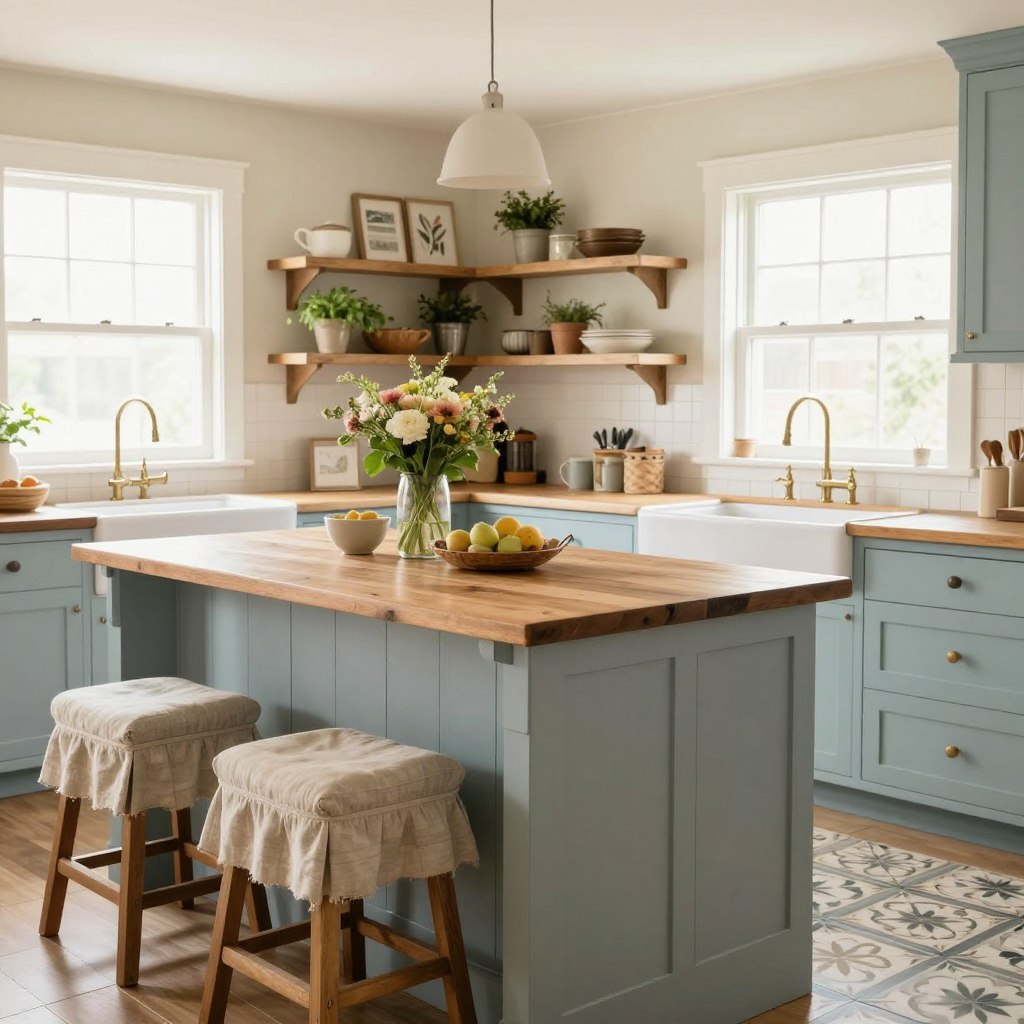
Adding seating and storage makes your island a multi-use space. Consider these key features:
For comfy seating, leave 12 to 15 inches of overhang on your counter. This lets people sit comfortably without feeling cramped.
Choosing the right countertop material is key. Here’s a comparison of two popular options:
| Countertop Material | Benefits | Maintenance Needs | Cost Range |
|---|---|---|---|
| Butcher Block | Warm appearance, excellent for food prep, adds natural beauty | Regular sealing required, avoid water sitting on surface, needs monthly oiling | $40-$100 per square foot |
| Stone (Granite, Marble, Quartz) | Durable, elegant look, easier maintenance, highly resistant to damage | Minimal upkeep, occasional sealing for granite and marble, quartz needs basic cleaning | $55-$200 per square foot |
Many people mix both materials on their islands. Butcher block for prep and stone for edges adds warmth and durability. This mix gives you the best of both worlds.
“The island is where memories happen. Make it beautiful and practical.”
Your island should reflect your family’s needs and style. Plan every detail, from seating to storage. Make sure your island is both stunning and functional.
Adding vintage kitchen décor turns a new kitchen into a warm, historic home. Accessories tell your story, making the kitchen feel loved for years. You can find great pieces at antique stores, flea markets, and estate sales.
Finding the right vintage items takes time and patience. Choose pieces that match your style, not just anything you see. A single, beautiful item has more impact than many cluttered items.
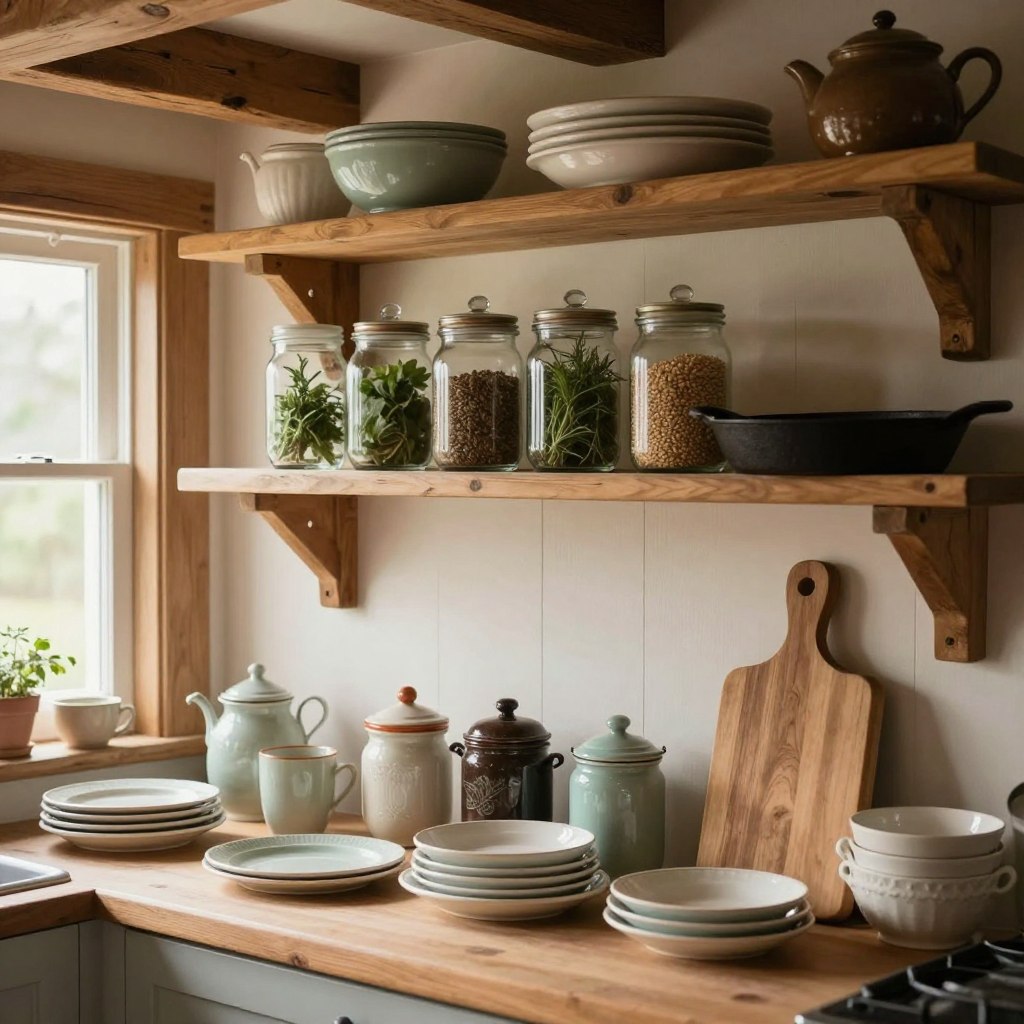
Mix new items with vintage finds to keep your kitchen fresh. A new dish towel looks great next to an old flour sack. Balance is key to avoid a museum look. Group three to five items together on open shelves.
| Vintage Kitchen Décor Type | Best Places to Find Them | Price Range | Durability |
|---|---|---|---|
| Enamelware Pieces | Flea markets, Etsy, antique malls | $15-$75 | Very durable, everyday use |
| Wooden Utensils and Boards | Estate sales, local antique shops | $10-$50 | Sturdy, decorative display |
| Kitchen Scales | Online marketplaces, antique stores | $20-$100 | Long-lasting conversation pieces |
| Advertising Signs | Flea markets, online auctions | $25-$150 | Wall decor, display only |
| Glass Jars and Canisters | Estate sales, thrift stores | $5-$30 | Functional storage and display |
Online marketplaces like Etsy offer authentic vintage pieces. Check reviews and ask about condition before buying. Focus on finding specific items to save time and money.
Display your vintage kitchen décor to highlight its beauty. Open shelves are perfect for showing off your finds. Arrange items by color or size for interest. Leave space between items for each to be noticed.
Your farmhouse kitchen should feel like you lived there before you bought it. Look for pieces that make you happy. The best kitchens tell your story, not just follow trends. Vintage décor adds a lived-in, loved feeling to your kitchen.
Lighting can turn a kitchen into something special. The right lights do more than just light up the space. They create a cozy atmosphere and connect all your design choices.
In a rustic kitchen, lighting has two main roles. It helps with cooking and cleaning. It also adds to the farmhouse look.
Choosing the right lights means thinking about both looks and function. Your lights should match the natural materials, warm colors, and vintage touches you’ve picked. Good lighting makes your kitchen feel welcoming and cozy. It highlights the farmhouse details you worked hard to include.
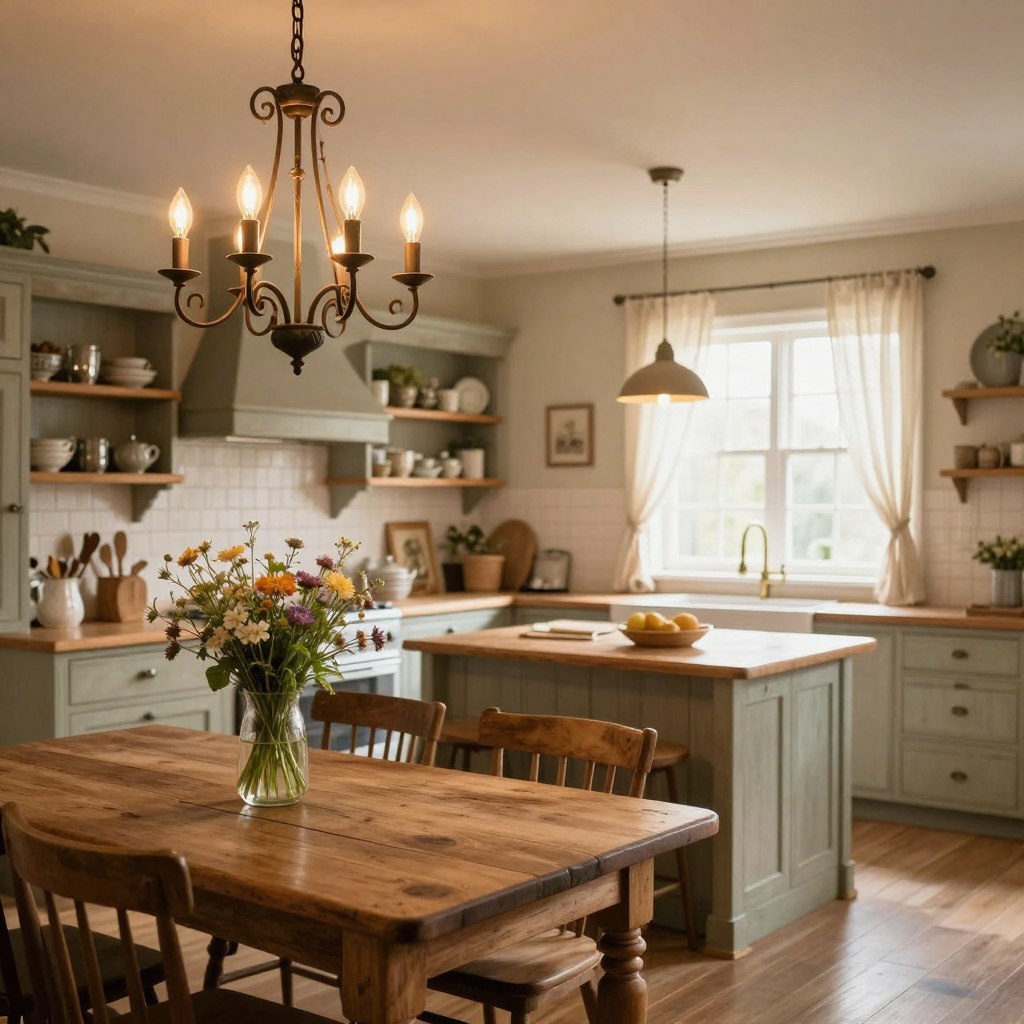
Pendant lights are very popular for country kitchen styles. They look great over kitchen islands and dining areas. Classic styles include glass globes, metal barn lights, and lanterns.
For pendants over an island, plan for two or three. Space them evenly and hang them 30 to 36 inches above the counter. This height gives enough light without blocking views.
Chandeliers add charm to rustic kitchens. Wood bead chandeliers add warmth. Wrought iron fixtures bring old-world charm. Wagon wheel designs add extra rustic appeal. They work best over dining tables or in kitchens with high ceilings.
| Fixture Type | Best Location | Height Above Counter | Typical Quantity |
|---|---|---|---|
| Glass Globe Pendants | Kitchen Island | 30-36 inches | 2-3 fixtures |
| Metal Barn Lights | Kitchen Island or Sink Area | 30-36 inches | 1-2 fixtures |
| Lantern-Style Pendants | Kitchen Island or Entryway | 30-36 inches | 2-3 fixtures |
| Wood Bead Chandelier | Dining Table or High Ceiling Area | 60-72 inches from table | 1 fixture |
| Wrought Iron Chandelier | Dining Table or Central Kitchen | 60-72 inches from table | 1 fixture |
Modern farmhouse style mixes rustic charm with industrial edge. Industrial lighting adds a modern twist to country kitchens. Exposed bulb fixtures, metal cage designs, and pipe-style lights add personality.
Mixing metals and finishes adds depth to your lighting. Combine black metal with brass or copper. This mix prevents your space from feeling cold or sterile. The warmer metals balance the harder industrial elements.
Industrial lighting works best with softer farmhouse pieces. A sleek Edison bulb pendant over a farmhouse sink creates contrast. Metal cage fixtures above a wood island tie together the rustic design. The key is balance. Let your industrial fixtures highlight your farmhouse elements without overpowering them.
Your lighting choices should reflect your personal style and the unique character of your home. Whether you prefer traditional farmhouse warmth or modern industrial edge, choose fixtures that make you smile. The right lighting brings your country kitchen style vision to life.
Creating gorgeous farmhouse kitchens is all about mixing real materials with smart design. You’ve learned how shiplap walls, reclaimed wood beams, and apron front sinks make a beautiful space. Each element has its purpose.
Farmhouse islands offer both storage and seating. Open shelving shows off your favorite dishes. Vintage décor and lighting add warmth and charm.
The beauty of farmhouse kitchens is their ability to accept imperfection. They celebrate items that show their age. A dented metal sign or weathered wood piece fits right in.
You don’t need to match everything perfectly. Your kitchen should reflect your personality and tell your family’s story.
Begin your farmhouse kitchen journey by choosing elements that excite you. Maybe shiplap walls or a white farmhouse sink appeal to you. Build your design slowly, adding pieces over time.
The most beautiful farmhouse kitchens are where families cook and make memories. Your kitchen will be a warm, welcoming heart of your home. It’s where loved ones gather and feel at ease.
Let your personality shine in every choice you make. Trust yourself to create a kitchen that feels right for you and your family.